Author’s note: This article is part of the series, “How to be a Biblically ‘woke’ Christian“
We all have multiple identities. Or, at the very least, we have many “sub-identities” that are distinct parts that make up the whole of who we are. I’ll use myself as an example to explain this.
I am a male. That is the most fundamental, chromosomally-determined physical attribute that has been true of me since the moment of my conception. I am also caucasian, which is another inherent aspect of my identity. There are other defining features, such as that I am left-handed, brown-haired (though, not so much anymore), blue-eyed, and shorter than average. I cannot change these things, and I did not choose them. It’s just who I am.
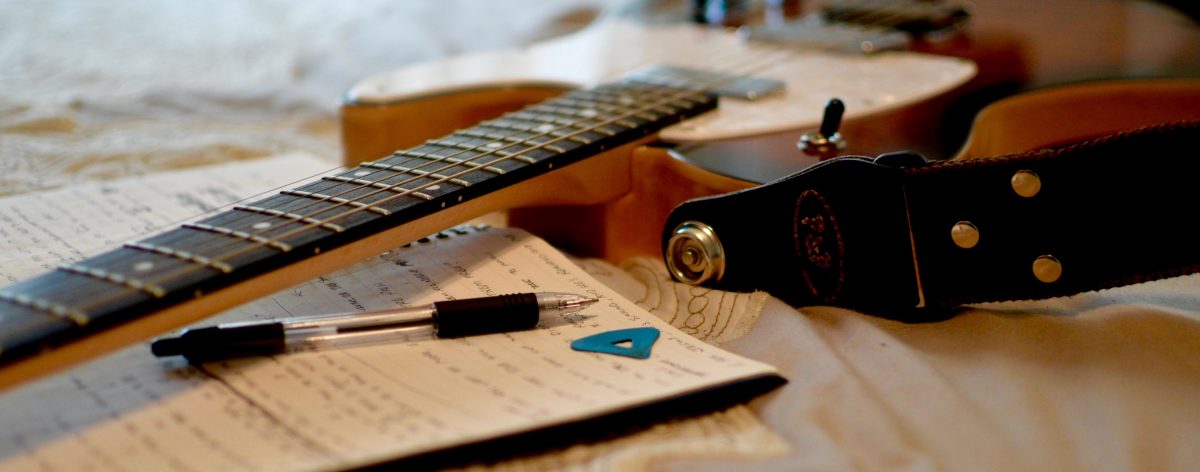
The rest of the elements I’ll mention that comprise who I am are things I chose, yet even some of them were chosen because of inherent aspects of my personality, genetics and other scientific reasons that I try not to spend too much time thinking about. So, here we go again. I am a husband, father, Airman, communicator, author, musician, cook, fisherman, disc golfer, college graduate, cartophile, DIYer, guitar collector and an amateur luthier.
Some of those things are relational, some are academic, some are vocational or hobbies; but all of them are different ways I identify. Furthermore, which identity I accentuate or lean into changes all the time based on where I am, what I am doing and who I am with. We all do this in various ways to various extents. I doubt there are many people in this world who act and speak the exact same way no matter their circumstances or company. It’s just part of the human experience. When I meet someone who likes to fly fish, I don’t talk about fixing guitars; and when I am at work, I am all in as an “American Airman” and officer, and I act as such, but when I am at home with my family, I am husband and father.
I admit there was one major omission in my list of identities, and, depending on your theology, it could fall into either the “chosen” or the “inherent” identities. I am a Christian, a follower of Jesus Christ. I have believed in Jesus for salvation from my sins and the wrath of God, and I have been baptized in the name of (publicly identified with) the Father, the Son and the Holy Spirit. So, in reality, that is the most fundamental and foundational of my identities. Everything else I am or do flows out from, and is built upon my identity as a redeemed, adopted child of God, or at least it should be that way.
There are three main points for fellow Christians to take away from all this (if you’re not yet a Christian, the main point is to repent of your sins and believe in Jesus Christ as Lord and Savior). The first is that God has seen fit to create us with multivariate personalities, physical characteristics and preferences that enhance the beauty and diversity of this world and provide opportunity to grow in love, patience and understanding with one another. The second is that where our identities overlap with those of others, we have the opportunity, and even obligation, to “become all things to all people” as Paul the Apostle says in 1 Corinthians chapter nine so that “by all means [we] might save some.” In other words, our identities, when founded upon and flowing from our identity in Christ, should be used to share the Gospel more effectively.
Finally, the third point is a warning to not allow our “I-dentity” to become “I-dolatry” by overemphasizing or over-prioritizing certain ones. For example, if I spend all my time buying, fixing, selling and playing guitars, I am sure to neglect other more important identities such as husband, father and Airman. If this happens, my identity has become idolatry, and I need to repent and refocus on my identity in Christ and once again allow that most foundational identity to inform and influence all others.
In a culture obsessed with identity – identity politics, gender identity, sports and entertainment fanatics, careers, subcultures, etc. – it’s even more crucial that our identities be firmly rooted in and flowing out of who we are as adopted children of God who have been identified with Christ and who exist to glorify Him and use our diverse identities to share the Gospel of Jesus Christ with those around us.
 Pens and Picks