
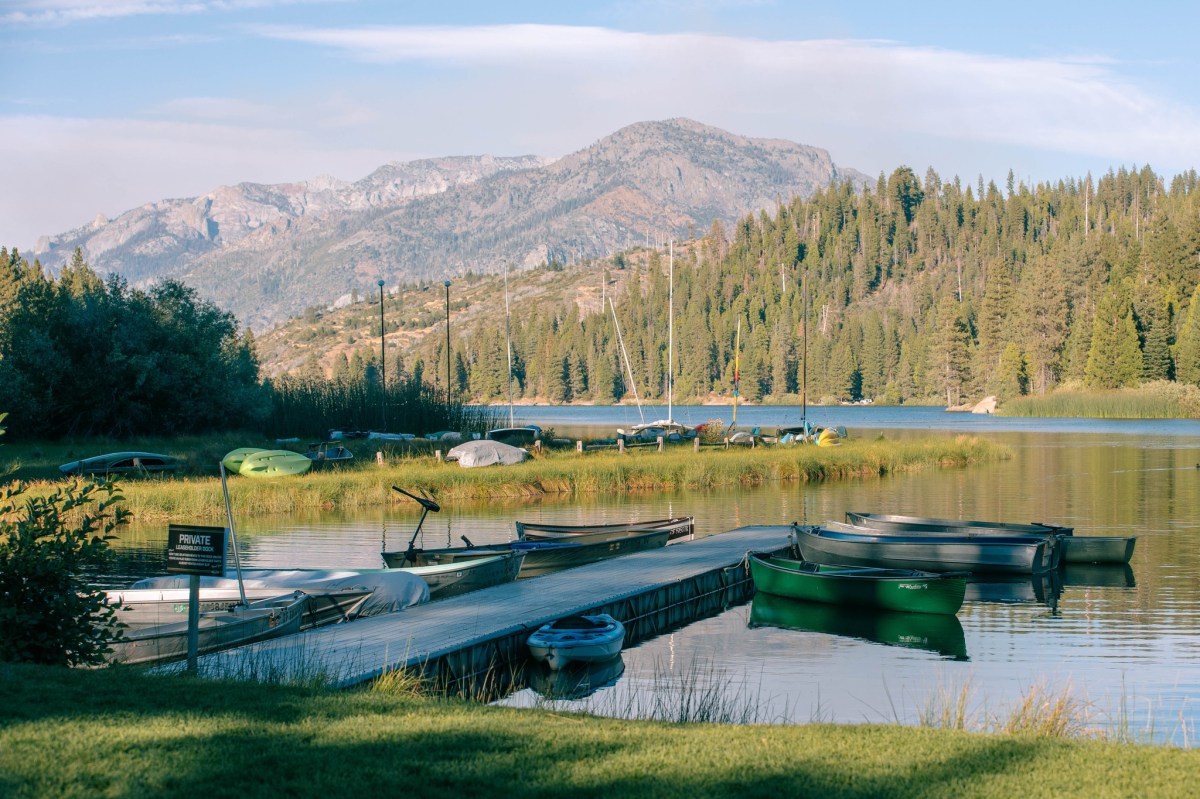
I grew up in California, and every summer my church would bus us up to Hume Lake Christian Camps where we would spend a week experiencing summer camp things: games, chow hall food, staying up way too late, a cool worship band playing Shout to the Lord (this was the 1990’s, after all), and a guest speaker who did his best to entertain and educate us from the Bible. Every week was the same no matter which camp you were in – Sunday was pepperoni pizza night, Tuesday was “Come to Jesus” night, Thursday was “Come back to Jesus” night, and Friday night was BBQ on the lawn. What was also as predictable as summer camp romances and exhausted camp counselors was that many of the decisions to follow Christ for the first time, or with more devotion, would last until these new “converts” or “rededicators” stepped of the bus back at home.
I witnessed this many times, and even experienced it personally. I went to Hume Lake from the time I was 11 until I was 15 before the Lord graciously laid hold of me on a Thursday night in 1998 at Ponderosa Chapel. That night, on which I thought I was “rededicating my life to Christ” since I had made a profession of faith and was even baptized years earlier (but which I later came to understand was actually my conversion) and all my “summer camp sampling” of Jesus and His Gospel became so much more. All the years I spent “tasting and seeing” prior had led to nothing because the Holy Spirit had not yet given me a heart of flesh and opened my eyes to see that the Lord is indeed good. No amount of mountain top experiences at summer camp or attending church with my family saved me. It was the irresistible, irreversible and irrevocable work of God to move me from the kingdom of darkness into the Kingdom of His beloved Son.
Christian camps are all too often viewed as either “the” place to send our lost kids to get them saved, or as total scams because of all the false professions and emotional manipulation that takes place at many of them. I won’t deny that even at good camps (like Hume Lake) emotions run high, Jesus-hype takes hold, and easy “altar calls” (i.e., “with everyone’s head bowed and every eye closed, just slip up your hand quickly if you want to make a decision to follow Jesus”), and many of the “conversion” numbers the camps tout to parents and financial supporters are far, far lower in reality. Then, bad theology at many churches these kids return to serves to give these new “Christians” and their parents a false sense of security, and years of struggle and doubt as many of the kids continue to live like the world in spite of the fact they raised their hand prayed the sinner’s prayer and maybe even filled out the ever-important decision card.
It may sound at this point like I am anti-Christian camp. After all the emotionalism and even deception (such as speakers saying “I see that hand” when no one was raising their hands, just to “encourage” reluctant young people to signify their desire in the moment to commit to following Jesus) I have personally experienced and witnessed while working at Hume Lake for three years, this would not be a hard position to support. However…
The problem isn’t Christian camps. The problem is our expectations. Do the lost hear of Jesus and the Gospel for the first time and get saved at camp? Absolutely. Do churched, but unsaved kids come back from camp spiritually alive and no longer living a double life? Undoubtedly (this was my own experience, as I have shared). Do many kids go to camp and make false professions of faith for any variety of reasons? Sadly, yes. So, rather than viewing camp as a necessary piece of every salvation story, or as a place to keep our kids from attending for all the negative points, we should view it as part of a varied diet of which it should only be one part.
As we raise our children, they are being fed at home, at church, at school, at their friends’ houses, and at places like summer camp. It’s our responsibility to ensure their diet is healthy and that in all these contexts they are “sampling Jesus” through the both the direct teaching of His Word, and through the examples of the people around them. Hopefully, as our children grow, whether they are saved yet or not, they are sampling from the buffet of biblical truth that comes from the pulpit, from family worship, from personal reading of Scripture, from music, from youth group, and from unique “pinnacle events” like conferences and camps.
Thus, a realistic expectation of camp tempers our expectations (though our hopes and prayers should be soaring!) since it’s only one item on the buffet as our children see and savor Jesus Christ. If they come back from camp and have fully and truly tasted and seen the goodness of the Lord, praise God! If they come back and tumble back down the mountain, then keep praying, keep feeding them, and keep trusting them to the Lord.
The years I spent attending, and then working at Hume Lake (to include being saved and finding my wife and marrying her on the lawn there that overlooks the lake and majestic Kings’ Canyon) were some of the most spiritually formative, fun and fulfilling years of my life. Now, many years later and as a parent of five kids, I have had to decide whether or not to allow them to attend various camps. Most of the time the answer has been “yes,” but always with the tempered expectation that the pathway to each of them moving from “summer camp sampling” to savoring the Savior is fully dependent on the unmerited grace of God, not on how good a camp’s program, music or speaker is, or how high the mountain top experience. Let’s remember that camp should only be viewed as one dish in the buffet of spiritual food, and that the Lord can lay hold of our children anywhere and at any time He pleases.



 Pens and Picks