
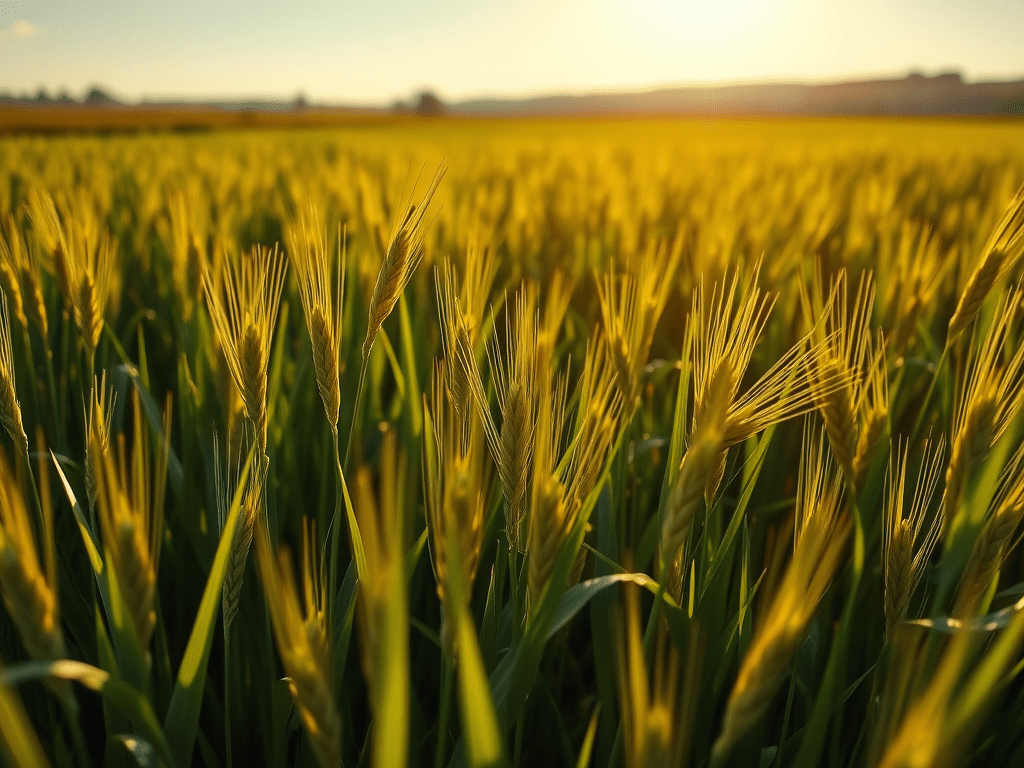
Thoughts on Matthew 13:24-30 and 36-40
The percentage of Americans working in agriculture over the last 200 years has decreased from approximately 75 percent to less than two percent. Why is this statistic relevant? Because about 75 percent of the parables Jesus told related to agricultural themes, and our current general lack of understanding of agriculture can limit our understanding of, and therefore the impact of, these teachings. What we have to apply more thought to today would have been much more easily comprehended by the original audience, as well as by more Americans before the early 20th Century. Jesus’ discussion of seeds and weeds and evil deeds likely resonated more with those who listened to the Word of God with soil-stained fingers. So, what can we learn today from parables like the ones from Matthew 13:24-30 and 36-43 about the “Wheat and the Tares”? The most prominent answer is a fancy theological word.
Eschatology is “the part of theology concerned with death, judgment, and the final destiny of the soul and of humankind,” according to the Google dictionary. What’s interesting about this parable is that it highlights the “already, but not yet” reality of the Kingdom of Heaven, describing the Kingdom in the present as well as the future. Jesus said many times while He walked around Judea that “the Kingdom of Heaven is at hand,” meaning that the Kingdom had come upon this world when Jesus came – though not an earthly kingdom like the one the Jews expected, but rather a spiritual kingdom that broke into the reality of this world through miracles, the Word of God, and the very presence of God in the person of Jesus Christ who, as we know, defeated sin and death by His sacrifice for us on the cross and His resurrection three days later. The Kingdom has indeed come in many ways, but it will also come in fulness at the end of the age.
While the primary message of this parable is as encouraging as it is simple – that the sons of the devil will be punished and the sons of the Kingdom will “shine like the sun in the kingdom of their Father” as explained by Jesus in verses 36-43, we can also get lost in the weeds (see what I did there?) of theological debates on the chronology of end times events.
Some Christians believe that there is a “Rapture” in which Jesus will secretly return and gather the Church before a seven-year period of immense trouble called the “Tribulation,” after which Jesus will come back visibly and establish an earthly kingdom for a literal 1000 years, and then after that He will judge the world and cast Satan and all unbelievers into the Lake of Fire. Other Christians believe that the 1000 year reign of Christ is symbolic and happening right now, and that Jesus will come back at the end of the age and resurrect both good and evil people to face the final judgement. There are other views as well, and many books, articles, blogs and more comments than can be counted have articulated them, so there is no need to even attempt to do that here. The encouragement here is to read this parable and the other passages about the end of the age to learn the most important thing: that Jesus is indeed coming back to judge the world.
So, what can we take from this passage as it relates to agriculture and our lives? Well, what does the man who owns the field do when he is told there are weeds growing along side the wheat? He wisely tells his workers to let them grow together until the harvest so as not to harm the wheat. This brings to mind Jesus’ prayer in John 17:15 where He says, “I do not ask that you take them out of the world, but that you keep them from the evil one” (if you have not read Jesus’ prayer for His disciples [and you] recently, you should stop now and do that). This parable also serves to remind us of verses like Psalm 92:7, “…that though the wicked sprout like grass and all evildoers flourish, they are doomed to destruction forever…” and Psalm 37:7, “Be still before the LORD and wait patiently for him; fret not yourself over the one who prospers in his way, over the man who carries out evil devices!”
Finally, perhaps the biggest takeaway from the parable of the Wheat and Tares should be to know what you are – a stalk of wheat that will be gathered and put in the Jesus’ barn, or a weed that will be plucked up and thrown into the fire? The miracle of redemption is that God can turn a weed into wheat, an enemy into a son or daughter, a sinner into a saint. This parable is a warning to unbelievers that the end of the age is coming, and judgement with it; and an encouragement to God’s children that one day “all causes of sin and all law-breakers” will be taken away, and the “righteous” will rejoice forever in the presence of their Father.

