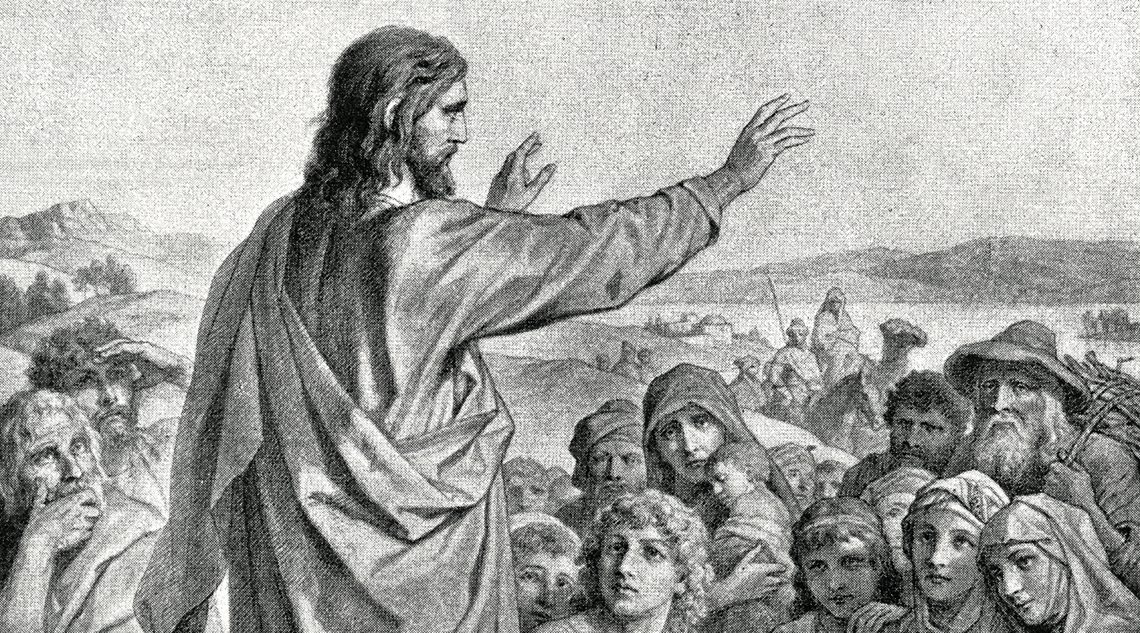

The Law and Prophets: Fulfilled in Jesus Christ

By David A. Liapis

Thoughts on Matthew 5:17-20

These verses really set the stage for what’s coming in the remainder of the Sermon on the Mount. Jesus is about to say some really hard things to those who think they are righteous because of how clean and good they appear outwardly. Jesus is also going to reframe their understanding of the Law and upset more than a few religious people in the process. Before He does this though, Jesus prefaces His statements by assuring His audience that He has no intention of abolishing the Law or the Prophets. He reconfirms the steadfastness and goodness of the Law, and that it stood immovable unless and until it was fulfilled perfectly. Jesus makes it very clear, likely to the delight of the religious leaders in the crowd, that the Law was of very high importance. He goes on to state that in order to be great in the kingdom of heaven, one must both do and teach the Law and the Prophets. “So far, so good,” the Scribes and Pharisees might have been thinking up to this point. But then, Jesus raises the bar above even the “righteous” religious. Jesus’ words at the end of verse 20 must have been a huge blow to the listeners. If they were honest with themselves, even the most religious among them failed to meet the standard Jesus set.

What Jesus says in the following verses of this sermon is significant for a number of reasons. First, He is stating that He is greater than the Law and the Prophets (“You have heard it said … but I say to you…” Emphasis mine) and at least equal with the original Law Giver – Yahweh. This was no small thing, and the implication was clear: “I am on par with God who gave the Law to Moses and for whom the prophets spoke.” These verses are also significant because Jesus attacks externality and incorrect assumptions about the Law and its interpretation. Thirdly, just like the Old Covenant, Jesus’ commands are impossible for us to obey perfectly. We, just as the religious people in the original audience, should all come away from this sermon feeling completely unrighteous and unable to do anything that pleases the Lord in our own power.

So, what hope do we have? This: the profound and life-saving reality that Jesus perfectly fulfilled the Law, something no one else could ever do. This is astoundingly significant in that Jesus’ law-keeping righteousness is accounted to us through the Gospel. Jesus lived a life of perfect obedience that we could not live, and died a death to pay for sin we committed, thereby making possible the great exchange that allows us to stand before a holy God. Thus, the harsh blow to our pride that this passage deals shows us our need for the Gospel and for Christ’s imputed righteousness without which we will never see the kingdom of heaven.

Dangers of dimness and distraction

By David A. Liapis

Thoughts on Matthew 5:13-16

The foremost difficulty in this passage is defining who the “you” of this passage are both in relation to the salt and to the light. Is it “you people of Israel,” or is it more precisely “you who are my true disciples”? If the first, then verse 13 can be interpreted as a dire warning of impending judgment on an entire people group. If the latter, then it could be interpreted that a person’s status as a useful Kingdom citizen can be revoked (“losing one’s salvation”). Based on what is known about the audience – the “crowds” from Galilee that contained a variety of people from Jesus’ disciples to common Jews to religious leaders to possibly even Gentiles – the more likely definition of “you” is Jews in general. The idea that the “you” is referring to Jews could also supported by Isaiah 60:1-3, which Jesus could have easily had in mind when He made this statement.

It’s easy to read this passage, and many others in the New Testament, disconnected from the context and presume post-Pentecost Christians assume the role of “you.” However, this cannot be the case in the Gospels, and care must be taken to interpret verses within their historical context and to be clear about the identity of the original audiences, and, if appropriate, secondary audiences such as all other Christians post-ascension. There is much value in reading and being familiar with the Old Testament writings that the original audiences of the New Testament era would have known. Jesus, Paul, Peter, John and the writer of Hebrews all reach back to Old Testament passages – sometimes explicitly, and sometimes very subtly. It’s crucial to our understanding of the whole counsel of Scripture to be able to identify and understand those connections.

It appears in verse 13 that Jesus is warning the Jews, God’s chosen people, to remain “salty” lest they become useless and are thrown away (see also Romans 11). It would be interesting to know how the Jews of that day received Jesus’ warning. Did they think, “Oh, yes, our disobedient forefathers were cast off because of their hard and unrepentant hearts, but we’re nothing like them”? Did they even see that they were valid recipients of that warning as well? Likewise, do we, when we hear a convicting message, think, “Oh, how I wish so-and-so would have heard that message”? Are we humble enough to recognize that we stand in need of a hard word to cut to our hearts? Do we take adequate time to consider our sin and our utter need for God’s grace in our own lives? I confess I spend far too little time doing this. I know I live a very distracted life, and I also know the Adversary wants me to spend all my time frittering my life away neglecting my relationship with Jesus and failing to take any time to think upon my great need for the work of Christ on the cross to atone for my sins.

—————————

Verse 14 is connected closely to verse 13 and uses imagery familiar to the Jews. Isaiah 49:6 says, “…I will make you as a light for the nations, that my salvation may reach to the end of the earth” and 60:3 says, “And nations shall come to your light, and kings to the brightness of your rising.” Similarly, Isaiah 2:2 says, “It shall come to pass in the latter days that the mountain of the house of the LORD shall be established as the highest of the mountains, and shall be lifted up above the hills; and all the nations shall flow to it.” Matthew 5:14 can certainly be connected to this verse, conveying two distinct truths: it is the “latter days,” and God’s holy mountain will be sought and inhabited by Gentiles. It’s as if Jesus were saying, “You are God’s chosen people, set apart for good works intended to bless the nations and draw people from every tongue, tribe and nation into the Kingdom of God.”

The warning and application of Jesus’ words here for us remain the same – don’t try to hide our light or become unfruitful. Our chief end as humans, and especially as Christians, is to glorify God. Jesus said that the light of His people is to shine before men so that God receives the glory. Since Jesus is the true light that has come into the world (John 1), without which no one will see the Lord, when we conceal our light we are concealing the very radiance of Christ in us. If we claim to be Christians, yet hide it from others and are completely ineffective in doing God’s work, then we should seriously examine our claim to know and believe in Jesus. It may be that what light we think is coming from us is only reflecting from those around us who are truly shining the light of Christ.

Gun control vs. the Gospel

By David A. Liapis

Within minutes of what the media is touting at the 18th school shooting in only the first 45 days of 2018, politicians and social media “contributors” were calling for new gun control measures to prevent these horrific acts of violence. It was not a surprise to learn that the alleged shooter used a semi-automatic rifle (AR-15) with multiple magazines on hand to increase their ability to kill and maim. So, let’s just ban these kinds of rifles and magazines, right? Sandy Hook, Orlando, San Bernardino, Las Vegas, Sutherland Springs and, now, Parkland to name a few locations where these “military assault rifles” have been used take dozens lives.

Here’s the problem: banning a type of gun, or all guns, will NEVER solve the problem of violence or prevent mass shootings. Let’s look at some salient points from history. Not a century ago, kids brought guns to school on a regular basis. We have accounts of kids in past times placing their rifles alongside coats and umbrellas in classrooms, yet there were no mass shootings. Why? What was different? It was not simply that the guns back then were less technologically advanced and less lethal. It was not that there were fewer guns in the hands of kids (which is probably not even factual). There’s something else. Something deeper.

Throughout history there have been murderous and violent people, many of whom were powerful (think King Henry VIII, Hitler, Stalin, etc.), but there are scant examples of individuals singlehandedly carrying out acts of mass violence. So, what’s different about the late 20th and early 21st Centuries? Is it the availability of guns and their technology? While the lethality of guns may make harming large numbers of people easier, guns were around for a long, long time prior to the emergence of these mass shootings in malls, movie theaters, churches and schools. Also consider that some of the most deadly acts of violence in America were not perpetrated with guns at all, such as 9/11 and the Boston Marathon and Oklahoma City bombings.

So, what should we do? What can we do? I will present a two word answer that many will balk at, deride me for, or dig up and try to use against me if I ever run for office (which I have ZERO aspirations of doing): The Gospel. We don’t need more gun control, we need more Gospel. And not the easy-believism, watered-down, accessory-like American “gospel,” but the life-transforming, Christ-centered and empowered, true, Biblical Gospel that changes hearts, communities and nations.

Here are a couple of quotes from Paul the Apostle to consider in light of the previously mentioned acts of violence:

Romans 1:28-31 (ESV) – “And since they did not see fit to acknowledge God, God gave them up to a debased mind to do what ought not to be done. They were filled with all manner of unrighteousness, evil, covetousness, malice. They are full of envy, murder, strife, deceit, maliciousness. They are gossips, slanderers, haters of God, insolent, haughty, boastful, inventors of evil, disobedient to parents, foolish, faithless, heartless, ruthless.” (emphases mine)

2 Timothy 3:1-5 (ESV) – “But understand this, that in the last days there will come times of difficulty. For people will be lovers of self, lovers of money, proud, arrogant, abusive, disobedient to their parents, ungrateful, unholy, heartless, unappeasable, slanderous, without self-control, brutal, not loving good, treacherous, reckless, swollen with conceit, lovers of pleasure rather than lovers of God, having the appearance of godliness, but denying its power. Avoid such people.” (emphases mine)

The solution to gun violence, and all violence for that matter, is not more redundant and freedom-eroding laws that only law abiding Americans will follow. No, the solution is the Gospel of Jesus Christ and the acknowledgement that there is a God to whom we are all accountable, that there is absolute truth and right and wrong, and that the human heart apart from the transforming work of Jesus Christ is desperately wicked. The way I see it is that there is an inversely proportional relationship to what Paul the Apostle calls the “suppression of truth in ungodliness” and the increase in evil. As the knowledge of God is suppressed in this nation more and more (school teachers and professors being of the predominant offenders), violence, disobedience, lovelessness and brutality will increase.

My heart breaks for everyone who has been affected by any of these acts of violence. I don’t want in any way to diminish the pain, or disrespect or dishonor the victims or their families; but I will say something that, if taken out of context, could appear harsh and even heartless, and it’s this: America is reaping what it has sown. God’s judgement is not idle, but “is being revealed from heaven against all ungodliness and unrighteousness of men, who by their unrighteousness suppress the truth.” Romans 1:18, NIV)

Let’s set something straight: America is not a Christian nation. It’s a nation proud of its sexual immorality and perversion, murder of the unborn and over-indulgence. Until and unless there’s a third Great Awakening, we will continue to endure mass shootings and all kinds of other evil. John the Baptist’s call to action from Mark chapter one is a fitting one, and one those love the Lord and believe the Gospel should shout from the rooftops that souls might be saved from eternal destruction, and that America might shine as a beacon of hope, justice and peace: “repent and believe in the gospel.”

The Beatitudes (Part 2)

By David A. Liapis

Thoughts on Matthew 5:7-12

This is a continuation of the previous post that examines the Beatitudes. Here we go…

“Blessed are the merciful.” This Beatitude is best illustrated by Jesus in Matthew 18:23-35, which is the story of the unforgiving servant. Although the servant was shown extreme mercy in the forgiveness of a debt so large he could never repay it (in the story, it amounted to 200,000 years’ worth of wages), he turned around and failed to show mercy to his fellow servant who owed him what amounted to 100 days of wages, or 0.00000137 percent of the debt the unforgiving servant had been forgiven of by his master. The words of Jesus in Matthew 18:35 should give us all pause. After the wicked servant was cast jail “until he should pay all his debt” (which we know to be impossible), Jesus says, “So also my heavenly Father will do to every one of you, if you do not forgive your brother from your heart.” Those who have been shown mercy, therefore, must be merciful.

“Blessed are the pure in heart.” This idea of a pure heart before God is not novel. Rather, Jesus is reiterating a number of passages that follow this theme such as Psalm 24:3-5, which says, “Who shall ascend to the hill of the Lord? And who shall stand in his holy place? He who has clean hands and a pure heart, who does not lift up his soul to what is false and does not swear deceitfully. He will receive blessing from the Lord and righteousness from the God of his salvation.” Psalm 73 deals with this concept of a pure heart as well, with the author, Asaph, admitting his sin and mistrust in Lord. He starts by making the statement, “Truly God is good to Israel, to those who are pure in heart.” Then, in the next verses he admits that he “almost stumbled” and was “envious of the arrogant when [he] saw the prosperity of the wicked.” How many times do we look at how the wicked seem to prosper and enjoy life, and wish that we could have wealth and a conscience that would allow us to indulge in the world? Asaph struggled in this way until he “went into the sanctuary of God” (v. 17) where he then understood that the wicked will be “destroyed in a moment, swept away by utter terrors!” After seeing his error and repenting, Asaph comes to this magnificent conclusion:

Nevertheless, I am continually with you; you hold my right hand. You guide me with your counsel, and afterward you will receive me to glory. Whom have I in heaven but you? And there is nothing on earth I desire besides you. My flesh and heart may fail, but God is the strength of my heart and my portion forever. For behold, those who are far from you shall perish, you put an end to everyone who is unfaithful to you. But for me it is good to be near God. I have made the Lord God my refuge, that I may tell of all your works.

This Psalm is particularly helpful in comprehending Jesus’ statement that the pure in heart shall see God. The writer of Proverbs asks, “Who can say, ‘I have made my heart clean. I am pure from my sin?’” (20:9) The answer, as we know from Psalm 73 as well as from 1 Peter 1:22-23, are those who draw near to God in faith and have had their souls purified by “obedience to the truth” – those who “have been born again, not of perishable seed but of imperishable, through the living and abiding word of God.” So, the pure in heart are simultaneously those who have been born again – which is all God’s work – and those who actively draw near to and seek God – our responsibility. We cannot live lives full of idolatry and unfaithfulness and expect to be counted among the pure in heart. Rather, as Asaph, we need to admit our faults, come before God in humility and let the water of the word of truth (the Gospel) wash us and make us clean.

“Blessed are the peacemakers.” This is one where the true cause and effect are somewhat hidden. Jesus says those who make peace will be called children of God. But, how can we, who are by nature selfish and proud, make peace with other fallen humans? It’s only because we have first been made to be at peace with God through the atoning and reconciling work of Christ on the cross. We who were once enemies of God and unable to love or be at peace with Him or others are now able to make peace because of what overflows from our lives as a result of Christ’s work in us. Those who are the children of God will seek to please their Father and seek to do as Paul says in Romans 12:18: “If possible, so far as it depends on you, live peaceably with all.” James, the half-brother of Jesus also says in James 3:18, “And a harvest of righteousness is sown in peace by those who make peace.”

“Blessed are those who are persecuted for righteousness’ sake.” Jesus’ words about being persecuted by those who persecuted the prophets is a scathing indictment on the Jewish people and indicates the worst persecution would come from within rather than without. This is made even more explicit in Luke 6:22 where Jesus says, “Blessed are you when people hate you and when they exclude you and revile you and spurn your name as evil on account of the Son of Man! Rejoice in that day, and leap for joy, for behold, your reward is great in heaven; for so their fathers did to the prophets” (emphasis mine). John 16:2 says as well, “The will put you out of the synagogues. Indeed, the hour is coming when whoever kills you will think he is offering a service to God.”

As mentioned in the introduction of the previous post, the causal relationship is deeper than the “if this, then that” of the Beatitudes. Some have viewed these eight statements as a kind of religious punch list that, if followed reasonably well, will lead to entrance into the Kingdom of Heaven. However, we know this assumption is patently false. We will see more and more as we move through the Sermon on the Mount that Jesus is raising the bar higher and higher lest anyone think they are capable of entering the Kingdom on their own merits. Thus, this, and the following verses reveal our great need for the Gospel to be applied to our lives and that Jesus Christ is the only hope for anyone to be saved from the just, eternal wrath of a holy God.

The Beatitudes (Part 1)

By David A. Liapis

Thoughts on Matthew 5:3-6

This is the first of two posts that will dig into the Beatitudes. Jesus opens the Sermon on the Mount with this snapshot of what a citizen of the Kingdom of Heaven will look like. As we will see, they are “if this, then that” statements. We will also see here and in the rest of the sermon that there’s a prior and even more important “if this” that must take place in order for anyone to be able to live this way and enter the Kingdom of Heaven – namely, salvation through faith in Jesus the Messiah and His atoning work on the cross.

“Blessed are the poor in spirit.” These are challenging words spoken to a people who were very proud of their heritage and religion, and, by our reading them, also to a people full of pride in themselves. The Jews, of all people, were particularly proud people who looked at Gentiles as inferior. After all, the Jews were God’s chosen people. We see this attitude on display in John when the Jews state, “we have Abraham as our father” in the midst of a debate with Jesus. Jesus basically says here in Matthew 5 that humility and understanding one’s spiritual poverty are requisite to entering the Kingdom of Heaven. We are reminded many times in the OT God will not turn away from those broken and contrite in heart. The next verse is linked to this one and also helps shed light on this first beatitude.

“Blessed are those who mourn.” This is not talking about people who are sad over worldly things. This is talking about people who are sorrowful over their sin, and maybe also the sin of others. People who mourn over their sin are likewise poor in spirit because they recognize their great need. These are the ones who will be comforted and see the Kingdom of Heaven.

“Blessed are the meek.” A quick search of the definition of this word reveals dozens of options, so which one is correct? Is it “enduring injury with patience and without resentment,” or “gentle, quiet, unaggressive; benevolent, kind; courteous, humble, unassuming,” or “not willing to argue or express opinions in a forceful way”? Was Jesus intentionally using a word with multiple meanings, or do we simply have a poor grasp on what that word once meant and what the original audience understood it to mean? It appears that, based on the use of the word in other texts, the Greek word πραΰς (praÿs. pronounced prah-ooce’) can also be translated as “humble” or “gentle.” My guess is that this is simply a case where our language does not have a single word deep enough to convey the full meaning of πραΰς, which is why we have to resort to either multiple single-word definitions or phrases. Regardless, the idea is that the person who embodies πραΰς is the kind of person willing to be pushed around or derided. Why would someone willingly have these kinds of things done to them? The context supports the idea that it’s because of belief in Jesus as the Messiah. Paul tells us in 2 Timothy 3:12 that “Indeed, all who desire to live a godly life in Christ Jesus will be persecuted.” “That’s ok” will be reply from the meek because they know that though they may endure losses of various sorts now, Jesus promises that they will inherit the earth.

“Blessed are those who hunger and thirst for righteousness.” Just as with the first two Beatitudes, this one reveals a needy heart condition. There’s no place for the self-sufficient or self-righteous in the Kingdom of Heaven. As we will see throughout this sermon, Jesus is driving toward one thing – to prove in every way that the standard for being admitted to the Kingdom is perfection, and that we are wholly incapable of achieving it on our own. Jesus’ sermon leaves the hearer who understands their depravity in utter dependence on the grace of God to receive anything but condemnation. It’s those who recognize their true need, feeling acutely a thirst and hunger for Jesus’ righteousness that is their only hope, who will be filled. Those who, like the Scribes and Pharisees, trust in their own “righteousness” will die hungry and thirsty, falling short of entering the Kingdom.

Preparation for the Sermon on the Mount

By David A. Liapis

Thoughts on Matthew 5-7

Before I go any further into the book of Matthew, I want to stress the importance of examining a passage in light of its historical context and immediate application to the original audience before we see how it applies to us today. Not only did the narrative take place in a certain context and with particular audiences, the authors of the books of the Bible wrote with specific audiences in mind. In Matthew’s case, it was the Jews. Thus, there’s a way in which we can and should approach this, or any book of the Bible, armed with at least a basic understanding of the historical context and original audience(s).

The beautiful thing about the Bible is that it’s more than a historical document, rather it is the “living” word of God and is profitable for teaching, rebuking, correcting and training in righteousness. As such, it transcends time and is applicable through direct and inferred interpretation of commands or principles based on context. This means that I can read the Sermon on the Mount and find reasonable ways to apply what Jesus said to His disciples and the crowds to my own life today. Furthermore, because the Bible was written by men who were inspired by the Holy Spirit as they wrote, we rely on the Holy Spirit today to teach and guide us as we read God’s word. As we read it, we must remember it is the very voice of God speaking. If we don’t hear it, it’s not that God is silent, it’s that we are not listening.

The upcoming passage of Scripture, Matthew 5-7, contains the “Beatitudes” – the first recorded portion of the what has been named “The Sermon on the Mount.” These are likely some of the most quoted verses of the New Testament, somewhere close behind John 3:16 and The Lord’s Prayer, which is in chapter 6 and a part of The Sermon on the Mount. The context of this passage was established in the preceding verses that talked about people from all over the region, to include many Gentile areas, coming to seek healing and to hear Jesus preaching. The Scriptures paint a picture of a giant crowd of people following Jesus around for a variety of reasons. These crowds are what motivate Jesus to climb up on the hillside and begin preaching the most famous sermon in history.

Reading only Matthew’s Gospel account leaves the reader with a fairly compressed timeline that breaks Jesus’ life and ministry thus far into neat sections – genealogy, birth, baptism, temptation, ministry inauguration, calling of disciples and, now, ministering and preaching to the crowds. There’s not much by way of expanding on what miracles Jesus performed or who he encountered within the narrative. Thus, when we begin reading the Beatitudes, the sense is that everyone is supportive of Jesus and his message, and the Lord begins by pronouncing blessings on a receptive people. However, Luke sheds more light on the context leading up this event as well as the mood and tone of the sermon.

Luke records the genealogy and birth narrative like Matthew, but with even more detail. He also introduces John the Baptist and Jesus’ baptism, but Luke conveys a much sharper tone in John’s words (i.e. Luke 3:7-9). Luke then moves on to Jesus’ temptation, as Matthew does, but then Luke includes a number of interactions that Matthew does not – interactions that change the tone and context a bit as he leads up to The Sermon on the Mount.

First, in Luke 4 we read about Jesus being rejected and almost thrown off a cliff in Nazareth. Chapter four also includes stories about Jesus healing people and casting out demons. Chapter five has Jesus calling his disciples and healing more people, but also describes friction building between Jesus and the Pharisees. In verse 21, the Pharisees accuse Jesus of blasphemy, and in verse 30 the religious leaders grumble about Jesus eating with tax collectors and sinners. Then, chapter six relates even more conflict between Jesus and the Pharisees when Jesus allowed his disciples to pick heads of grain on the Sabbath (and then states he is the Lord of the Sabbath, essentially stating he is God). Then, on another Sabbath, Jesus heals a man with a withered hand, filling the religious leaders “with fury” prompting their discussions about how to get rid of Jesus. It’s with this tense history between Jesus and the religious leaders that The Sermon on the Mount is delivered. Not everyone present liked this Nazarene preacher.

What’s interesting about Luke is that he not only highlights the animosity between Jesus and the religious leaders in the preceding chapters, he also includes the pronouncement of “woes” after his shortened recording of the Beatitudes. The reason for stating all of this is because our understanding of Jesus’ words is affected by our understanding of the context and audience – an audience that contained people who loved Jesus, hated Jesus, sought Jesus for pure motives, sought Jesus for selfish motives, Jews, Gentiles and Jesus’ own small cadre of disciples.

One of the first things that needs to be done when approaching the Beatitudes is to determine what is meant by the word “blessed” since Jesus uses it in each of the next nine verses. There are many ways this word can be interpreted throughout the Bible, particularly in the Old Testament. The first time we see this word used is when God is creating the animals in Genesis 1:22. He blesses them and tells them to be fruitful and multiply. This usage of “blessed, translated from the Hebrew word “barak,” and many others in the OT within the context of conveying a desire for someone or something’s success, relates to the prosperity of that which is being blessed. God blessed His creation, He blessed certain people, people blessed people, and people, such as the Psalmist, blessed the Lord. While prosperity can certainly imply or include happiness, that’s not the overt sense of the word “barak.” However, the Hebrew word “’esher,” which is also translated as “blessed,” does mean happiness, and that is word used in many of the Psalms and other verses where it describes the disposition of a person (i.e. “Blessed is the man who fears the Lord…”).

Similar to the way multiple Hebrew words with different meanings are translated as “blessed” in the OT, so it is with the Greek in the NT. The Greek word “eulogētos” is translated “blessed” and means “praised” or “to praise” and is used in numerous verses related to blessing the Lord. This word comes from the root “eulogeō,” which can mean to praise, to consecrate, to pronounce blessings upon (i.e. “bless those who curse you”). The Greek word translated “blessed” in Matthew 5 is the word “makarios,” which can mean “happy,” but also “blessed” or “supremely blessed.” Thus, what Jesus is saying in the Beatitudes can mean simply “happy,” or it can mean that God’s providential favor rests upon the person. One is an active human feeling/disposition, while the other is passive receiving of divine favor. Which is it?

Based on what I have studied and heard in sermons, the best translation of “blessed” is the one that carries the deeper meaning, not just “happy.” Although, it has been suggested and is quite possible our current understanding of the word “happy” might be much more shallow than what it once was. Thus, the way to approach this passage is simply to know that Jesus states people who are like those named in the Beatitudes have God’s divine blessing upon them.

It is here that I must admit my utter ignorance and even discomfort with what Jesus says in the upcoming section of the Bible. The Sermon on the Mount remains the most difficult passage of Scripture for me to interpret and/or accept. What follows for the remaining chapters and verses of this sermon are my feeble attempts at exegeting these passages. Unless the Lord helps me, what I am about to undertake might well be a complete waste of time for me to write and for you to read. May God help me.

The Gospel vs. the gospel of the kingdom

By David A. Liapis

Thoughts on Matthew 4:23-25

This passage basically sets the stage for the Sermon on the Mount. At this point people are coming from all over Palestine to include Judea, Decapolis, Perea (based on the words “beyond the Jordan,” and even possibly Syria to be healed and to hear Jesus teach. This is remarkable considering the distance from Jerusalem to where Jesus was teaching and healing was more than 70 miles, which was no small distance to travel in those times. It’s also notable that Jesus’ fame “spread throughout all Syria,” a Gentile region. The sense here is that Jesus is a novel person with unusual power and a different message – a message He termed “the gospel of the kingdom.” But what is the gospel of the kingdom?

It would not be wholly accurate to think of the gospel of the kingdom as exactly synonymous with the Gospel message as we are most familiar with it, namely the suffering and death of Jesus on the cross in the place of sinners and His subsequent burial, resurrection and ascension – since those events had not yet taken place. Jesus’ message, and the one He told the disciples to proclaim (Matthew 10:7) was that the kingdom of heaven was at hand, and, later, to believe in Jesus as the Messiah (a part of the message that became more and more explicit as Jesus’ ministry continued). At this point He is setting the stage for His impending death on the cross, which He will allude to numerous times over the next three years. Jesus left no doubt as to who He was (and is) – the Son of God – and what He came to do – lay down His life as the ultimate and final sacrifice to atone for sin (revealing Himself as the suffering servant of Isaiah 53). We have to remember that we think of the Gospel in the context of a (mostly) completed story, while the gospel of the kingdom was a message proclaimed in the midst of that story. In spite of that, the messages are basically the same: The kingdom of heaven has come close and Jesus is the Christ, the Son of God who takes away the sin of the world, believe in Him.

The Sermon on the Mount is often described as a blueprint for kingdom living and a directive for citizens of the kingdom of heaven. Also of note is that this is the first use of the word “gospel” in the New Testament. This word, which means “good tidings” is derived from the same root that the angels’ “good tidings of great joy” in Luke. Thus, Jesus was proclaiming the good tidings of the kingdom that was “at hand.”

Some of the evidences of this manifestation of the kingdom of heaven included the healings, miracles and casting out of demons described in this passage. What’s interesting is that although Jesus used “signs and wonders” at the outset of His ministry as proofs that the kingdom had come, He later rebukes the people for their desire for more signs and their disbelief in what they had already seen. Their request for more signs was the evidence of their unbelief. Jesus had done and said enough to convince those who would believe.

The sad thing is, we often reveal our unbelief as well when we fail to trust God’s promises and obey His word … in spite of all we have already seen Him do. We want just one more sign, one more answered prayer, one more “testing of the fleece” to make sure. Our unbelief shows our lack of trust in the goodness of our Father. Jesus rebukes this way of thinking a few verses later in Matthew 6:30 (spoiler alert). He attributes this type of thinking to a lack of faith and provides a very simple remedy that, in practice, is often very difficult to do: seek first the kingdom – the kingdom of which Jesus proclaimed the good news. However, when we do, we will find the peace that surpasses understanding as we trust in the one who upholds the entire universe by the word of His power and works all things together for good for those who love Him and are called according to His purpose.

Bad hermeneutics and the calling of the Disciples

By David A. Liapis

Thoughts on Matthew 4:18-22

It is important to read the parallel passages in the other Gospels regarding the calling of the first Disciples as each one reveals additional facts. For example, Mark’s accounting is almost word-for-word the same as Matthew’s except that he adds that James and John were in their boat mending the nets along with their father and their hired servants. This addition of the servants doesn’t do a whole lot to change or enhance our understanding of the story except that it shows the “Sons of Thunder” were involved in a what appears to be a successful fishing business and that what they left to follow Jesus was more than just a hard, minimum-wage job. Rather, they left a lucrative family business and what they could have gained financially. They also left their father in a lurch, which might have been viewed as rude at best, and dishonoring at worst. Thus, when they “left everything and followed” Jesus, it was much more significant than if they had been poor fishermen looking for a new line of work, as they are sometimes depicted.

Luke’s account and the additional details he includes about Jesus’ actions and teachings before the disciples are called also contradicts some common descriptions of the event. Some preachers have relied only on Matthew and Mark’s accounts, making the point that these fishermen up and left everything the first time they encountered Jesus. “Oh, how impressive Jesus must have been to them that they would leave everything to follow this stranger,” some have said. However, Luke paints a completely different picture. By the time Jesus called his first disciples, he had not only been baptized and tempted (as both Matthew and Mark include), he had preached in Nazareth and proclaimed Isaiah 61 to have been fulfilled, healed a demon-possessed man, healed Simon’s mother-in-law and many others, and preached in the synagogues of Judea. On top of that, Luke’s accounting of the calling of the first disciples has Jesus preaching to large crowds and using Simon’s boat to teach from, and then instructing the fishermen, who had a poor night of fishing, to cast their nets. The resulting catch was so significant Simon fell to his knees recognizing Jesus’ power as God. It’s with this background and past interaction with Jesus that these men willingly followed him when called.

One fact Matthew and Mark record is that John the Baptist was arrested either during or very shortly after Jesus’ temptation in the wilderness and before the Disciples’ calling. Luke and John don’t include this detail, but John actually includes quite a bit more information about the first Disciples – information that is difficult to reconcile with the synoptic timelines. John records that Andrew, Simon’s brother, was a disciple of John the Baptist. On a number of occasions, John the Baptist proclaims that Jesus is “the Lamb of God, who takes away the sin of the world.” Andrew hears this and actually leaves John at one point in order to follow Jesus. Andrew then goes and tells his brother, Simon Peter, that he has found the Messiah and brings Peter to him. The next day, John tells us, Jesus called Philip and Nathanael.

Here one of the issues that arise between John and the Synoptics becomes evident. First, John the Baptist’s arrest does not happen for a while longer as he appears at the end of John chapter three baptizing near Aenon. Secondly, Jesus’ turning water into wine at Cana is believed to be his first miracle. Thirdly, Jesus is said to have had disciples (John 2:21) when he cleansed the temple during the Passover. If John’s rendering of the first months of Jesus’ ministry are taken literally, since John the Baptist has yet to be arrested, it would seem to mean Peter was already a follower of Christ when he was called in Matthew, Mark and Luke. This creates an issue for the way many have interpreted the timing and nature of the calling of the first Disciples. While this does not ultimately undermine the authority of Scripture in that there are no actual contradictions, nor does it affect any doctrines, it does however show the importance of looking at the Gospels in parallel so sermon points are not based on erroneous interpretations of timelines or background information.

The virgin-born Nazarene Bethlehemite from Egypt, Naphtali and Zebulun

By David A. Liapis

Thoughts on Matthew 4:12-16

Verse 12 almost makes Jesus sound cowardly, basically saying that Jesus “withdrew” into an obscure area far away from the Jewish leaders who had just arrested John the Baptist. However, as we will see, this action was not an act of cowardice, but rather was done in order to fulfill Scripture and to set the stage for future interactions with the people in and around that region. This is also possibly the first allusion to what it called the “Messianic Secret” – the idea that Jesus strove to hide His identity as the Messiah until “His hour had come.” Indeed there are numerous instances in the Gospels where the Jews “sought to lay hands on Him” and to stone Him or throw Him off a cliff because of who He claimed to be. Jesus knew the timeline and the events that needed to take place before He would be crucified, and withdrawing from tense situations was something He did more than once to maintain that timeline.

This section contains the seventh instance wherein Matthew states that what Jesus did or where He went fulfilled prophecy. Most of these examples involve locations. It’s notable that God had the prophets ascribe such a large number of qualifiers as to where the Messiah would come from and where He would go. If you really want to get down to the basics, Jesus originally came from the womb of a virgin, as foretold in Isaiah 7:14 (Matt 1:23). We are then told the Christ would come from Bethlehem as spoken of in Micah 5:2 (Matt 2:6). Then we see Jesus being called out of Egypt as described originally in Hosea 11:1 (Matt 2:15). Once Jesus and his parents returned from Egypt, rather than return to Bethlehem, they continued on to Nazareth because of another dream Joseph had and to avoid trouble from Archelaus, Herod’s son. Matthew states that this move to Nazareth of Galilee fulfilled “what was spoken by the prophets” even though there is no Old Testament passage wherein this is said explicitly. I say “explicitly” because there is much agreement amongst commentators that Matthew is referring to Isaiah 11:1, which says, “There shall come forth a shoot from the stump of Jesse, and a branch from his roots shall bear fruit.” Also, in Zechariah 3:8 and 6:12, we read of the servant of God whose name is “Branch.” This is important because the Hebrew word “netzer” means “sprout” or “shoot” and is the root word from which Nazareth is derived. Now, here in Matt. 4:14-15, we are told Jesus went to live in Capernaum by the sea in the territory of Naphtali and Zebulun in order to fulfill Isaiah 9:1-2. So, in order for Jesus to have been the Messiah, based on the prophesies, he needed to be a virgin-born Nazarene Bethlehemite from Egypt, Naphtali and Zebulun – all of which Jesus was.

Verse 17 tells us that Jesus then began to preach repentance “for the kingdom of heaven is at hand.” However, this is not the first time this theme occurred for John the Baptist had proclaimed the same message in Matt 3:2. Also of note, Mark says in Mark 1:15 that Jesus stated “the time is fulfilled, and the kingdom of God is at hand; repent and believe in the gospel.” This again makes it clear Jesus words and actions – and those allowed of the people and religious leaders – all happened according to the timeline God established. One final point is that “at hand” in the Greek means “to bring near” or “nearby,” and as used in the Old Testament Hebrew the term means near of place, time or personal relationship. In essence, Jesus was saying the kingdom is nearby, “it is here.”

The temptation of Jesus

By David A. Liapis

Thoughts on Matthew 4:1-11

The first thing that jumps out in this chapter is the fact the Holy Spirit led, or “drove” (according to Mark), Jesus into the wilderness. But it says more than just that Jesus was led into the wilderness, Matthew points out that Jesus was driven into the wilderness for a reason – to be tempted. While the Matthew and Luke accounts can make it seem like Jesus was only tempted in three ways by Satan and then left alone, Mark seems to indicate that Satan was battering Jesus with temptations for the entire 40 days. Contrast this with the prayer Jesus will teach the Disciples not long after – “lead us not into temptation, but deliver us from evil.” Also think of the contrast with James 1:13 which says, “Let no one say when he is tempted, ‘I am being tempted by God,’ for God cannot be tempted with evil, and he himself tempts no one.” It must be noted that Jesus came to accomplish specific tasks, some of which are hard to understand, and yet are only understandable, in light of His uniqueness as fully God and fully man (as we saw with His baptism and now His very deliberate temptation). As such, there are different “rules” that apply to Him. Matthew asserts that the reason for His time in fasting in the wilderness was to be tempted by the devil. If Jesus were any other man, this would present a problem when we look at James chapter one. However, since Jesus is who He is, instead of a problem we see this event explained by Hebrews 4:15 wherein it says, “For we do not have a high priest who is unable to sympathize with our weaknesses, but one who in every respect has been tempted as we are, yet without sin.”

Left here without further consideration, this answer seems satisfactory. But … then James asserts that God does not tempt us to sin nor can He be tempted, but rather identifies the root of our temptations as the desires arising from our evil hearts. This raises some questions that have been asked, and to which various answers have been provided, from the time of Thomas Aquinas to the present day.

Since Jesus was not of the seed of Adam (the importance of being born of a virgin) and therefore had no fallen, sin nature, did He not have an internal desire to sin? If yes, then it must be that the temptation he endured in the wilderness came from purely an external impetus, namely, Satan or “the tempter,” and not from evil desires in His heart. If this is the case, then what does this do to the fact the author of Hebrews says Jesus is a high priest who can sympathize in every way with our weaknesses? If Jesus had no real desire to sin because He is God, then what hope does this give us since we are not even close to being God? Having a fallen, sin nature seems to be the chief of our weaknesses.

Some have proposed that Jesus didn’t rely on or “lean into” His deity while on earth, but rather demonstrated a life lived in perfect obedience to God and reliance on the power of the Holy Spirit. This seems to satisfy the problem about temptation while not taking away from the full deity of Jesus. It also allows for Jesus’ miracles and other supernatural acts since the Apostles, through the power of the Holy Spirit, did the same things. This is but one option.

Other options include the idea that Jesus was not really tempted, that He was tempted and had evil desires like us, and that the temptations were real but meaningless in light of Jesus’ deity. Some of the options are heresy, while others don’t fully answer the question of how Jesus can really be a sympathetic high priest because of His divine nature. I’m not actually going to give a “final” answer of what I think here since, honestly, I am not quite settled on how to reconcile Hebrews and James. I will provide this link to an article I found helpful and hope you will take time to dig into this yourself.

I think it’s also important here to mention Hebrews 5:8-9 which reads, “Although [Jesus] was a son, he learned obedience through what he suffered. And being made perfect, he became the source of eternal salvation to all who obey him.” This passage at first glance can present some difficulty, especially if you’re being confronted by people (such as Jehovah’s Witnesses) who teach that Jesus was a mere man, or a divine creation, and not God. “How could God, if He is omniscient, learn anything? And, if God is perfect, how could Jesus have been God if he was ‘made perfect’?” Here’s the key – Jesus was never disobedient, and therefore never sinned. He “learned” obedience through suffering in that He endured the suffering without sin and in full obedience, proving that He could do what was possible for only Him to do. He was “made perfect” in that He completed all that He was sent and called to do, including enduring and rejecting temptation as a man for us perfectly and proved Himself as the only sufficient and perfect sacrifice for sin – “The Lamb of God who takes away the sin of the world.” He cried, “It is finished!” as He died on the cross after becoming sin and absorbing all the wrath of God in the place of all sinners who believe, bringing the process of atonement to completion. He never lacked anything, but only proved to everyone that He was perfectly obedient, even unto death.

In summary, the temptation of Jesus was a necessary part of Him doing all that needed to be done in order to be a fitting and final substitute, mediator and savior for mankind. He had to become a man, fulfill perfectly the law of God (all righteousness) on our behalf, become sin, be punished in our place, defeat the power of death and intercede for us as He is doing right now at the right hand of the Father. While there remains, at least for me, some mystery to how all that works, I remain confident that God has revealed to us all that is necessary to know Him and come to saving faith in Jesus Christ. “So then faith comes by hearing, and hearing by the word of God.” – Romans 10:17