
Loving pigs more than Jesus

By David A. Liapis

Thoughts on Matthew 8:28-34

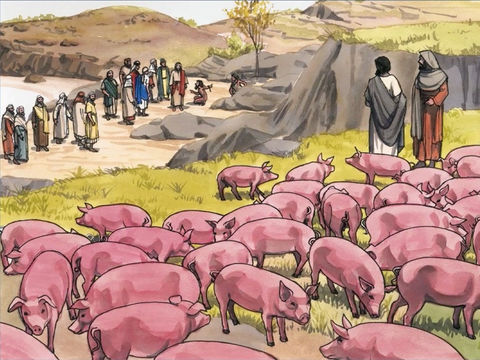
There were men “so fierce, no one could pass that way” along the path Jesus chose to go after disembarking from the boat that had just miraculously survived a horrible storm. There’s no way to know for sure, but I suspect there must have been some kind of warning – whether verbal, by signage or simply by legend – that dangerous demoniacs roamed this area. Only the Gentile pig herders dared enter that part of the countryside.

Immediately upon recognizing Jesus, the men, controlled by the demons, acknowledged Jesus for who He was (and is) – the Son of God. They could have said, “Jesus of Nazareth” or “Jesus, the teacher” or “Jesus, from Capernaum,” but they didn’t. In fact, up to this point in the Gospel, the only other time Jesus’ status as God’s son was overtly confirmed was by God the Father himself when Jesus was baptized by John. So here we have demons, whom James says believe in the Son – and tremble – openly and publicly proclaim a truth that has been disputed by men since the moment Jesus first appeared on Earth.

The second truth the demons confirm is that of impending judgment. They ask Jesus if He has come to torment them “before the time.” They knew what they had coming. They didn’t argue it, but simply stated it as a determined course of action. So as with the truth of Jesus’ relation to God the Father, this truth of judgment is disputed. Yet, it is confirmed over and over in the Bible by Jesus, prophets, Apostles, and even demons.

In Matthew’s account of this story the demons didn’t even give Jesus time to rebuke them and cast them out. It seems like Jesus walks up on the scene, the demons, knowing their future destruction and present inability to resist, acknowledge Jesus’ deity, accept their impending doom without argument, and then volunteer to leave the men if Jesus would but grant them to enter the swine. Jesus speaks literally one two-letter word in this whole version – “Go!” However, Mark’s account contains more details, including the fact Jesus was commanding the demons to come out as well as asking the name of the demon(s). The demon(s) replied, “My name is Legion, because we are many.”

What happens next would likely please any Jew who heard of it – a herd of 2,000 unclean swine plunging to their death into the Sea of Galilee. However, in the region Jesus was in, the Decapolis, the Gentiles there were none too pleased as is revealed later in this passage. Before that though, it’s interesting to note the main thing the herdsmen told of when they ran back to the city to spread the news of that days’ events was not the loss of what was likely their entire livelihood, but rather that the crazy men were in their right minds because of the demons fleeing them at the command of Jesus.

At this point the Bible says, “all the city came out to meet Jesus.” However, their reaction reveals the destruction of the swine was more important to them than the freeing of the two men from their demon possession – they begged Jesus to leave their region. In other parts of Palestine, the people flocked to Jesus to be healed and hear Him teach; but here, they wanted nothing to do with Him. So, as chapter nine, verse one shows, Jesus respected their request, as foolish as it was, and got in the boat and went back home. These people valued their swine more than the presence of the Son of God.

Mark spends time describing what took place between Jesus and how at least one of the men begged Jesus to allow him to remain with Him. Jesus doesn’t allow this, but said, “Go home to your friends and tell them how much the Lord has done for you and how He has had mercy on you.” Rather than argue or complain that Jesus refused his request, Mark 5: 20 states that he obediently went and proclaimed in the region of the Decapolis what Jesus had done, and, it says, “and everyone marveled.”

How does this story about demons and swine apply to us? It should make us think of our own lives and what we have or care about that is worth more to us than the very presence of Jesus in our lives. When we choose to listen to or watch things that Jesus wouldn’t, we choose them over Jesus. When we get angry or argue with our spouses, children or others, we are valuing our pride and ambitions over the presence of Jesus. Our prayer needs to be that God would take, forcibly if necessary, the idols, attitudes and desires in our hearts that we value more than the presence of our Savior. What are the “pigs” in our lives?

Fact: God will give you more than you can handle

By David A. Liapis

Thoughts on Matthew 8:23-27

There’s a saying you’ve probably heard if you’ve spent any time around Christians: “God will never give you more than you can handle.” The scenario in this passage seems like an example of exactly the opposite, and rightly so. That pithy statement is complete rubbish on multiple levels and contradicts what the Bible and real life actually teaches.

There is a passage of Scripture that says God will not allow us to be tempted beyond what we are able to bear, but will provide a way of escape (1 Corinthians 10:13); however, we are not promised anywhere that God will prevent us from encountering “storms” that will force us to reckon with our own inability to survive without divine intervention. God did not create us to be self-sufficient. He created us to be dependent upon him for all things – and to know it. 

Based on how Matthew describes this scene, we have to wonder where Jesus was sleeping in the boat. If the vessel was “swamped” as the passage says, then would he really have been somewhere in the bottom/below deck? Or, was he above deck sleeping while the storm raged around him? If so, what does that indicate? Was Jesus faking sleep to test the disciples? Was he so tired from being up early praying and then spending all day talking and healing that he was to able sleep through a tempest? Regardless, this storm was not without purpose.

The Disciples’ cry of despair, “We are perishing,” is significant considering a good number of them were experienced fisherman who grew up on the Sea of Galilee. It’s unlikely they had not been on the lake during storms in the past, so to be so adamant about their impending doom seems to imply this storm was particularly powerful.

The reality is that God often allows “storms” – pain, suffering and trials – beyond what people can bear on their own with the very purpose of proving two things: our weakness and God’s power. Paul the Apostle rejoiced in his weakness and infirmities, saying that through them God’s power was displayed – to the glory of God. (2 Corinthians 12:9)

We live in a humanistic culture that encourages us to “find our inner strength” and be the masters of our own destinies, so the idea that we are weak and need a Savior is contrary to what we’re taught. However, recognizing we’re weak and needy is actually a prerequisite to being truly saved. As the brother of Jesus reminds us, “‘God opposed the proud, but gives grace to the humble.'” (James 4:6)


The paradox of the free gift that might cost you everything

By David A. Liapis

Thoughts on Matthew 8:18-22

Many times over many years, the “free gift” of salvation through Jesus Christ for the forgiveness of sins has been pitched as just that – free. Sadly, and to the destruction of many people’s faith, the nature of the “freeness” of the gift is often misrepresented. Preachers and evangelists are quick to emphasize the word “free” because, who doesn’t like free stuff? And what’s more is that if we quickly raise our hands “while every head is bowed and every eye closed” and “ask Jesus into our hearts,” we receive affirmation from the preacher that we’re now undoubtedly saved and can rest easy in our “eternal security” no matter what happens or how much we backslide or live in a way that contradicts the faith we claim to possess.

What’s wrong with this salvation sales pitch is that it doesn’t take into account the whole Bible, or what we see in history and in the present day – that following Jesus costs us something. For some, following Jesus costs them their lives; for others it’s their jobs, their money, their reputations, their comfort, their freedom, or their time. In every era and every place where people commit themselves to live for Christ, it costs them.

In this passage in Matthew, Jesus tells the people who proclaimed their desire to follow him that he didn’t have a place to call home where he could host them, that following him completely and immediately was more important than even honoring the death of a family member, and, in the Lukean parallel, that anyone who says they want to follow Jesus but turns back is not “fit for the kingdom of God.”

Jesus made it very clear throughout his time here that following him was costly, and that has not changed. What else has not changed is that there are people who want to follow Jesus for what they think they can get from him (health, wealth and prosperity), but, as the parable of the sower illustrates, will fall away as soon as hardship or persecution arises on account of Jesus.

When Paul calls Christ’s sacrifice and eternal life “the free gift” in Romans chapters five and six, he’s juxtaposing it with death through the “trespass” of Adam and the seeking of righteousness by means of the Law. The word translated “free gift” is the word “charisma” in Greek, and means, “A favor with which one receives without any merit of his own,” “The gift of divine grace,” or, “The gift of faith, knowledge, holiness, virtue.” Paul is basically saying that salvation from sin and eternal death is given by God to people who don’t deserve it, who cannot earn it, and who must receive it as it is – an unmeasurably valuable gift without which we remain slaves to sin and death.

God is not a slick salesman trying to trick us into accepting a free gift that turns into an expensive money pit. He’s not a deceitful Messiah who lures us in with an offer of peace and salvation that instead results in our suffering and death. Rather, what Jesus offers us – the truly free gift eternal salvation from sin and death – is so valuable that the accompanying suffering and persecution (that Jesus also promised) is nothing compared to the greatness of what we receive. It’s that reality that solves the paradox of the free gift that may cost us everything.

Conclusion: The Bible does not contradict itself. Rather, false and/or poor teachers of it misrepresent what “the free gift” of salvation means. What the Bible teaches is that although you may not live what seems like “Your Best Life Now” in this short and temporary existence, those who “persevere to the end” will obtain true, eternal life later.

Healed for a reason

By David A. Liapis

Thoughts on Matthew 8:14-17

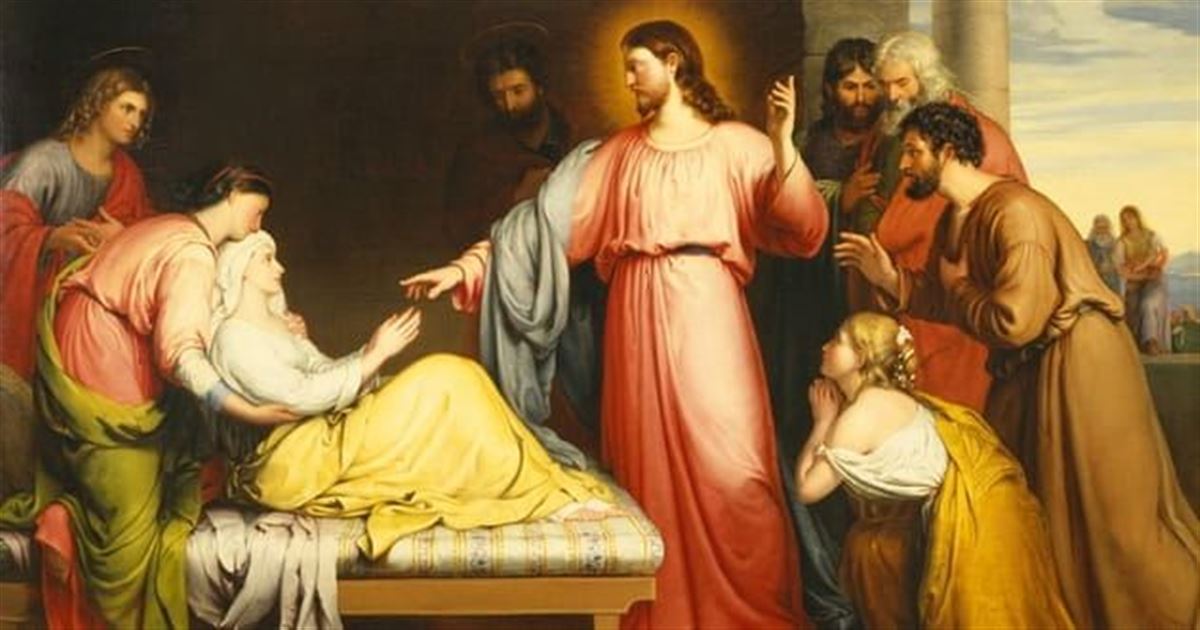
There’s an awful lot going on in these four short verses that hint at multiple reasons for suffering, as well as the proper response to healing should it come. Here’s a quick summary of some of what we can learn from these verses: Jesus healed to show his compassion for the people, to reveal his power as God to heal “with a word,” and to prove he was the Messiah by fulfilling prophesy.

There are many books, commentaries and sermons out there about finding purpose in pain and suffering, both in general and in the lives of God’s children. It would be a bit of a stretch, but possible, to go that direction with this passage in relation to Peter’s sick mother-in-law or the “many” people brought to Jesus for healing. However, what I want to focus on is the application of what to/how to respond when we are healthy (whether from healing or simply being well).

Throughout the Gospel narratives, Jesus heals people of all kinds of ailments from fever to leprosy to disfigurement to demon possession, and even “healing” from death. For all of these stories and hundreds, if not thousands of people healed, there are only a few instances where we are given insight into the responses of the people to the healing Jesus performed for them. In a few of cases, Jesus told the people he healed to “tell no one” (Matthew 12:15-21; Mark 7:31-37; Luke 5:12-16, 8:40-56) since it was not yet time for Jesus to be fully revealed as the Messiah (the “Messianic secret”). In other instances, Jesus commissioned the healed people to go and tell others what God had done for them (Luke 8:1-3 and 26-39). In other instances, the healed person and/or the crowds of people worshiped and praised God for the wonderful things they had witnessed (Matthew 15: 30-31, 21:14-17; Luke 17:11-19; Bonus: Acts 3-4:1-31).

One of the clearest examples we have though of an appropriate response to healing is a phrase in a single sentence: “…and she rose and began to serve [Jesus].” It would be easy to conjecture about Peter’s mother-in-law and whether or not she complained during or after her illness, or infer she served Jesus and all of his disciples, or if all the people healed that evening were brought to her house (which would be quite a lot of houseguests to entertain after being bedridden). However, we’re told nothing more than that she got up and served Jesus after she was healed. However again, that’s really all that’s needed to know how to apply this passage to our lives today.

We often pray for many things – safety, prosperity, wisdom, healing – that we receive gladly, but then fail to acknowledge God’s gracious answers to our prayers, and/or fail to use that which was given for God’s glory. I am as guilty of this as anyone.

The challenge is to not get so wrapped up in life, especially when things are going well, that we think and act as functional atheists. When we have health, either as the norm or as a result of divine healing, our response, or “reasonable act of worship,” is to offer ourselves in service to Jesus. The antithesis to this is functioning in the mindset that we are entitled to health, wealth, prosperity and the comfortable life those things bring. That’s the lie of “American Dream” and the false “Prosperity Gospel” it has engendered.

What this means is that if you’re sick, it’s for a reason – to serve the Lord. If you’re healed from that sickness, it’s for a reason – to serve the Lord. If you’re healthy and prospering, it’s for a reason – to serve the Lord. As Paul says in Romans 14:8, “For if we live, we live to the Lord, and if we die, we die to the Lord. So then, whether we live or whether we die, we are the Lord’s.”

We are not worthy

By David A. Liapis

Thoughts on Matthew 8:5-13

This is a very interesting and instructive passage. It’s interesting because of the dialog between the various characters in the story – a Roman Centurion, a sick bondservant, Jews following Jesus, Jewish elders, and, of course, Jesus himself.

We know that most Romans despised the Jews and would have never called one, “Lord.” By calling Jesus “Lord,” this Roman risked both being punished and/or disgraced for acknowledging the lordship of not just a Jew, but a Jew who claimed to God – and was later executed for it by the Romans. He also risked angering and losing favor with the ruling Jews of Capernaum who would become jealous of Jesus (we learn in the parallel passage in Luke 7:1-10 that this Centurion was well-liked by the Jews and that he had built their synagogue).

As far as the invalid bondservant goes, we don’t know if they were a Jew, a Roman or from some other country Rome had absorbed into the empire. It’s interesting because the Centurion loved his servant enough to risk the things in the previous paragraph, and Jesus was willing to, at best, heal a Jew who was a bondservant who belonged to Gentile, or, “at worst,” heal a Gentile servant of a Gentile master. Either way, there are a number of cultural complexities and broken norms.

We know from Biblical and non-biblical sources that the Jews believed they would become unclean if they entered the house of a Gentile, which helps make sense of Centurion’s reluctance to have Jesus come into his home. It’s possible since he knew Jewish laws and customs so well that he was actually showing Jesus kindness by refusing to let him enter his house and become unclean. Regardless of his motive, the result was Jesus extolling his faith over and against the weak faith of the Jews.

This passage is instructive not only because it’s proof that salvation is for both Jews and Gentiles, but also because of how Jesus exalts faith over worthiness.

In order to see this final point, you will need to read the Luke passage and how the Jewish elders implored Jesus to heal the servant because the Centurion was deemed “worthy to have [Jesus] do this for him” because he loved the Jews and build them a place of worship. However, Jesus made no mention of the worthiness of this Roman when he consented to heal the servant. Rather, he “marveled” at the Centurion’s faith and, as the Matthew telling of this story concludes with Jesus saying, “Go, let it be done for you as you have believed.”

What’s the application for us? It’s that we need to stop striving to be “worthy” to be loved and accepted by God. Jesus isn’t looking for us to be worthy of saving, healing, hearing, blessing, etc. Paul tells us in 1 Corinthians 1:27-29, “But God chose what is foolish in the world to shame the wise; God chose what is weak in the world to shame the strong; God chose what is low and despised in the world, even things that are not, to bring to nothing things that are, so that no human being might boast in the presence of God.” Paul also says in Ephesians 2:8-9, “For by grace you have been saved through faith. And this is not your own doing; it is the gift of God, not a result of works, so that no one may boast.”

God’s love is not lavished upon us because of our worthiness, but Christ’s. Jesus lived the perfect life we could not, bore the wrath of the Father for us on the cross, and was raised from the dead to demonstrate his power over sin and death. Because of that, we can have Jesus’ righteousness imputed to us, God’s wrath removed from us, and live in the hope of being raised from the dead like Jesus. And, as Paul emphasized in both passages above, the way God does this removes all grounds for boasting in our worthiness. God alone gets the glory.

Bring your filth to Jesus

By David A. Liapis

Thoughts on Matthew 8:1-4

Picture this scene in your mind: You’re part of the crowd that has just spent the past couple hours listening to Jesus of Nazareth teaching the most astonishing things you’ve ever heard. The air is alive with the excited chatter of thousands of people and constant swirls of dust being kicked up from the countless feet and then carried aloft by the sea breeze. Then, all of a sudden you hear faintly among the clamor, “Unclean!” You look around quickly, wondering if you’ve misheard. Then you hear it again, but this time it’s clear … and near, “Unclean!”

The people behind you part as if Moses himself had split them as the sea, and then you see him – a leper. Gross. Smelly. Blood and other fluids seeping through the bandages placed about his arms, legs and neck in a vain attempt to hide the vileness beneath. You rapidly move and become part of the undulating flow of the expanding and contracting void opened for this man to pass untouched. You didn’t realize how closely you had been walking to Jesus, as the movement of the crowd reveals the Good Teacher not 10 cubits in front of you.

Jesus stops and turns around to see who this person is who is causing such commotion. Everyone stands as still as Lot’s wife after she turned to see Sodom and Gomorrah, and not a sound is heard except for the soft shuffling of the shunned man’s feet as he approaches Jesus. The Master remains fixed in his position and his look of compassion on the man, who falls on his face at Jesus’ feet and cries out, “Lord, if you will, you can make me clean.” Then, to the sheer horror of the people, the famous carpenter reaches out his sturdy hand and lays it directly upon the filthiest part of the man’s wrappings. Gasps are heard escaping the shocked crowd, but they are quickly drowned out by the voice of Jesus saying, “I will; be clean.”

You watch in utter amazement as the visible marring of the skin disease on the man’s face heals instantly. The man stands up and Jesus gently removes the soiled bandages to reveal the most perfect, healthy skin you’ve ever seen. The man looks at his body in awed silence and attempts to stutter out a “thank you” to Jesus, but is interrupted. “See that you say nothing to anyone, but go, show yourself to the priest and offer the gift that Moses commanded, for a proof to them.” The man then breaks into a run in the direction of the Synagogue to do as Jesus had said, but, as you later learn, he only partially obeyed in that he spread the news to everyone he could about what Jesus had done for him.

Leprosy was a name for multiple infectious skin diseases in the Bible, and there were very clear instructions provided in the Law (Leviticus in particular) about how it was to be dealt with. Sadly, those who were infected were banished from society and lived lonely, miserable lives until their disease or subsequent infection killed them.

Many times in the Bible, this terrible aliment is analogous with sin – it’s filthy, we attempt to cover it up, it affects relationships, and, eventually, it leads to death. No matter how many times we wrap gauze and bandages around our sin, eventually it seeps out; and, just like the leper in this story, we need the touch of Jesus. The application of this passage for us is, like the man in this story, to not let people or social norms or anything else keep us from coming to Jesus in all of our filth, brokenness and sickness to seek healing from the only one who can give it. Just as Jesus stated so loving his willingness to heal the leper, he tells us in John 6:37, “All that the Father gives me will come to me, and whoever comes to me I will never cast out.” (Emphasis mine)

Foundations of rock or sand

By David A. Liapis

Thoughts on Matthew 7:24-29

I remember as a kid learning a song with motions (that I still remember) based on this passage about the wise and foolish men who build their homes, one on the rock and one on the sand, respectively. However, I can’t recall ever associating the building of my house on the rock with doing the things Jesus had spent an hour or two talking about on a hillside next to the Sea of Galilee in the First Century. It was always about Jesus being our rock and foundation of faith, which is a very good thing, but not quite what this passage is about. There was a disconnect with the understanding that our faith is evidenced by our works, as James 2:14-26 spells out so plainly for us. James says boldly that “faith without works is dead.”

If I had to sum up the entire Sermon on the Mount with one sentence, it would be this: Jesus is after our hearts, not just our actions (works). Notice I included the word “just.” There’s a reason for this, as this final section reveals. Good works cannot save us, but, as Jesus himself said in this sermon, they point a lost and dying world to the glory of a God who is seeking people who will worship him in Spirit and in truth (5:16). As such, it should be our joy to live lives of obedience to Christ that are markedly different from the world.

There is one other important thing we need to learn from this passage, and it’s that fierce storms tested the strength of both houses. Neither the foolish nor the wise men were spared having to weather challenges that revealed the quality of what they toiled to build. Those who choose to ignore the words and ways of Jesus will come to utter, eternal ruin. Those who hear and obey the voice of the Savior, which includes, “Come to me all who labor and are heavy laden,” as well as all the various commands to repent, receive and proclaim (the Gospel), will find their house stand firm and hear, “Well done, good and faithful servant,” in the end.

We should all be “astonished at [Jesus’] teaching” just as the crowds were who had gathered to hear him. Jesus teaches with authority because, well, he’s God; and yet, as I have learned, sometimes Jesus says things that I don’t like or agree with. The all-important question is this: will I submit my will and my understanding to God’s Word and trust that he knows best? The answer to this question is painfully obvious and simple, but it’s not always easy.

Jesus turned everything the Jews believed about the Messiah and their religion on it’s head. Nothing has changed. The Kingdom of Heaven is nothing like the kingdom of this world, and it follows then that the citizens of the Kingdom will look nothing like the citizens of this world. Are we willing to take up our crosses, deny ourselves and follow Jesus Christ? He has shown us in this sermon just a glimpse of what that will look like.

It was January 25, 2018, when I prefaced my attempt to write about the Sermon on the Mount with, “Unless the Lord helps me, what I am about to undertake might well be a complete waste of time for me to write and for you to read. May God help me.” I pray it has been as helpful for you as it has been for me. The best way to get to know our Lord is to spend time studying Him – his words; his meaning; his use of sarcasm, wit, humor, idiom and history. Jesus is an amazing person with a colorful and interesting personality. He’s not some hippie-ish, lovey guy who just wants to give everyone a hug, or a harsh taskmaster demanding strict obedience to his commands. He’s a dynamic, feeling, expressive person who graciously extends the offer of relationship to us; and, as he teaches, relationship with him is relationship with all of the persons of the Triune God.

Justifying death

By David A. Liapis

Have you ever been in an ethics class and been confronted with an ethical dilemma exercise? One that I’ve encountered a few times is a doomsday scenario where there are more people than can fit in the only survivable fallout shelter, and the group is tasked with deciding which people would be let in and kept alive to rebuild and repopulate the world, and which would be left outside in the nuclear holocaust to die. Basic facts for each of the individuals are given – gender, age, education level, profession/expertise, and, for some, character traits and medical conditions. The group is then given 30 minutes to decide who lives, who dies and why.

The discussions I’ve been a part of were tumultuous and challenging, and we always ran out time. Then came the interrogation from the instructor. Why did we choose to let the prostitute or mentally handicapped person in or out of the shelter? Why the old scientist or the convicted felon? Right or wrong, we found we all had opinions, and justification, for who we’d let live or die; and if we’re honest with ourselves, we all ascribe value to people based on what we know – or think we know – about them.

Let me ask some tough questions. Do you feel the pain of loss as deeply when someone you don’t know dies? Why not? Are they not a human being with dignity and value? Do you feel as badly when disaster strikes some country across the ocean as you do for your home country? Why? Are not 10,000 foreigners as deserving of life and health as everyone else (theological answer aside)? Have you ever questioned why God would let a “good” person die instead of someone you deemed “bad”?

I am still grieving along with many people the loss of a man whom I was friends with years ago and whose extended family I have remained connected with over the years. This man was hero in many ways – a fireman, a husband, a father, a God-fearing, patriotic American. He was a young man who was full of life and promise and upon whom his pregnant wife and four other children depended. And yet, God took home to heaven “before his time” after losing a painful and tragic battle with a brain tumor. Now his widow has to deal with her own emotional turmoil in additional to that of her four little children and be ready to bring a fifth, now fatherless, child into the world. There are fewer more tragic scenarios than this one.

Sometimes, like now, we might wish we were the classroom instructor grilling God about why he chooses to let some “evil” people live and prosper while other, seemingly more “worthy,” people die. We want the authority to demand God’s justification for his choice and we question the fairness or wisdom of it. But, we cannot. Instead, we have two options: 1. Doubt the goodness and wisdom of the God who is supposed to be all knowing, all powerful and the very definition of love; or 2. Trust in that same God even though his ways are not our ways and believe he will somehow heal the pain, mend the brokenness and work all things together for good in his time.

There is only one reason anyone ever chooses option two – the Gospel of Jesus Christ and the hope we have in the resurrection. The Bible tells us that because Jesus died on the cross for our sins and rose again to life that death has been defeated and its sting has been removed. Only those who trust in Jesus can find hope in the midst of such unspeakable sorrow. Only those who know Jesus as Savior can say, “To live is Christ, and to die is gain.”

Without these amazing truths that undergird our faith, we are hopeless; pain and suffering are meaningless; and life is a cruel joke that ends in sorrow and death. But, oh Christian, rejoice that not only our lives, but even our deaths have meaning! Rejoice that death to us is but a door to the eternal presence of our Lord! Triumph in the truth that Jesus has turned death on its head, and that one day all God’s adopted children with be gathered together to praise the triune God for eternity! To him be the power, and the glory forever! Amen.

Tune our hearts to sing God’s praise

By David A. Liapis

Come Thou Fount of Every Blessing is one of the most well-known hymns, making it into numerous “top 10” or “top 25” hymns of all time lists – and for good reason. The lyrics of this song are rich and compelling, and I want to do two things with them in this post. The first is to tease out the idea of God “tuning” our hearts to sing His praise individually and corporately. The second is to attempt to “interpret” and rewrite the lyrics of all the verses in a way that will hopefully make them resonate even more.

Have you ever seen musicians – specifically the guitarists or string players – plucking one string at a time and then adjusting the little knobs at the top of their instruments, one after another? Have you seen them do this before the church services or concerts begin, and sometimes even in between songs? Or how about this: have you ever heard what it’s like when someone doesn’t tune their instrument properly? Even a single out-of-tune string can be enough to ruin the whole song/set.

As we gather at church, we come as broken, sinful, distracted people whose hearts are often far from being ready to boldly approach the throne of God and offer sacrifices of praise. Our hearts are out of tune, and, just like an out-of-tune instrument, what comes out can range from slightly displeasing to downright terrible. What Come Thou Fount of Every Blessing is asking is for God to prepare our hearts to sing out of an overflow of appreciation for the unmerited grace of God. This “tuning” can happen in various ways: confession of sin (1 John 1:9), reconciliation with others (Matthew 5:23), recognition of God’s holiness and our depravity, thankfulness, and serving others, to name a few.

While the preparation our individual hearts is important, there’s also a corporate aspect to the “tuning of our hearts” together that can be illustrated well with the different ways to tune an instrument. You can tune an instrument to itself and make it sound great – so long as you don’t try to play along with any other instruments. In the same way, we can try to tune our hearts to ourselves and sound pretty good in isolation; but when we come together with others, what happens then?

There’s a reason we are told not to forsake the assembling of ourselves together (Hebrews 10:25) and to teach and admonish one another in “in all wisdom, singing psalms and hymns and spiritual songs” (Colossians 3:16). There’s safety and encouragement that comes from being “in harmony” with one another (Romans 12:16 and 15:5; Colossians 3:14), and the only way to find this kind of harmony is in a community built around the Gospel of Jesus Christ.

The bottom line is this: we need God to “tune” our hearts both individually and corporately, and we need each other to as the “band of Christ” to proclaim to a lost and dying world the grace and love of a Savior worth singing about.

Now, here is my attempt to “interpret,” or paraphrase, the lyrics to Come Thou Fount of Every Blessing in an effort to draw out some of the rich themes and meanings. Here we go:

Verse 1

Come, Giver of all good things, prepare my heart to proclaim your grace;

Your unending mercy is worthy of loud, eternal praise;

Teach me to sing in concert with the saints and angels in heaven;

I am determined to praise the glorious display of God’s great love

Verse 2

I will tell of the wonderful things God has done!

Only by God’s help alone have I made it this far,

And it’s only by God’s gracious providence I will get to heaven;

Jesus pursued me even while I was an enemy of God, doing whatever was right in my own eyes;

Jesus shed His blood on the cross to save me from God’s wrath

Verse 3

I owe Jesus more than I could ever repay for the grace He shows me every day

May God restrain my unfaithful heart to Himself with chains of grace

I am often distracted and drift from your paths, Oh Lord,

I too often foolishly turn away from the God I love

Lord, take hold of my heart and keep it secure; make me ready to be in Your holy presence

The scariest words in the Bible

By David A. Liapis

Thoughts on Matthew 7:21-23

I believe this passage contains the most terrifying words in the entire Bible. They are so frightening for two primary reasons. The first is because they are a final verdict of eternal condemnation to those who hear them. If all Jesus said was what is contained in the last verse, it really wouldn’t be unexpected – “I never knew you; depart from me, you workers of lawlessness.” Lawless sinners being cast into hell because of their wickedness and rejection of Jesus is a truth found throughout the Bible, so why should we be surprised? After all, that’s what everyone who rejects the Gospel not only deserves, but chooses. It goes back to a couple sections ago where Jesus calls us to “Enter by the narrow way,” but those who choose the wide and easy path to destruction “are many.”

The second reason, and what makes these words so terrifying is that “I never knew you…” is spoken to people who called Jesus “Lord” and ministered in his name. These are people who did many things we would put into the category of “The things only ‘Christians’ do” – casting out demons, prophesying, performing miracles – all in the name of Jesus. If people doing these kinds of things can be false, what about people who do other “lesser” deeds in the name of Jesus – teaching, singing, serving in children’s ministry, working at the pregnancy resource center or food closet…

We must remember the theme of the Sermon on the Mount as we approach this passage. Jesus isn’t saying no one can be confident in their salvation and that we will all have to wait until it’s too late to find out if we made the cut. Jesus has spent the past three chapters worth of text condemning religiosity and making the point that it’s about the condition of our hearts more than it is about our actions. However, let’s pause and discuss the human heart for a moment.

In spite of what our culture would like to believe – that everyone is basically good and has a good heart – the Bible says otherwise. It says our default is a wicked, stone heart. Jeremiah the Prophet says, “The heart is deceitful above all things, and desperately sick; who can understand it?” (17:9) And Paul the Apostle says in Romans 3:10-12, “As it is written, ‘None is righteous, no, not one; no one understands; no one seeks for God. All have turned aside; together they have become worthless; no one does good, not even one.’” That’s a pretty bleak description of us in our natural, sinful condition. But, there’s hope.

God, speaking through Ezekiel the Prophet says, “And I will give you a new heart, and a new spirit I will put within you. And I will remove the heart of stone from your flesh and give you a heart of flesh.” (36:26) There’s a theological word for that – regeneration. Ultimately, there is only one who can make a dead heart alive, and that’s God.

Now, to connect the passage at hand with our hearts. Since the Bible tells us all our hearts are stone, or dead, from birth (the doctrine of Total Depravity), and only God can make them flesh, or alive, then it’s only by God’s intervention (grace) that we can obey the words of Jesus from the Sermon on the Mount. It follows then that those who have good hearts do “The things only ‘Christians’ do” out of an overflow of love-fueled obedience and faith rather than to be “seen by men.” Most importantly, those who have been given new hearts and made alive with Christ are those whom Jesus knows and who will hear, “Well done, good and faithful servant. Enter into the joy of your Lord” when the end comes.

So, the big question that to this point I have not attempted to answer is: how do we know if we are those who are known by Christ versus those who say “Lord, Lord,” but are not? One answer I’ve heard is “listen to your heart,” which of course, based on the verses above, is folly. Another is to judge by fruit, or actions, as Jesus said in the previous verses (“Thus you will recognize them by their fruits”). However, the people who will hear “I never knew you” did things we’d look at and say, “that’s good fruit. They must be saved.” Confused yet?

I wish there were a simple, foolproof test to determine someone’s status with God, but there’s not. There are many verses in the Bible that provide criteria and indicators such as being filled with the Holy Spirit, living in a manner pleasing to the Lord (obedience and righteousness), and the Spirit of adoption that calls out to God as our Father, to name a few. We are also given warnings to examine ourselves (2 Corinthians 13:5), to “work out [our] own salvation in fear and trembling” (Philippians 2:12). This all takes deliberate effort.

So, how we can have confidence in our standing before God and not have to live in fear that we will be among those who have deceived themselves and others? How would I respond to the question, “how do you know you are saved?” My answer is this:

I know I am saved not because of one event, such as reciting the Sinner’s Prayer, raising my hand during an altar call or being baptized, but because of a combination of many factors – pieces of evidence – that give me the assurance I am known and loved by Jesus Christ. What are these proofs? They are a life marked not by sinless perfection, but a continual struggle against the flesh and sin (sanctification); godly sorrow (not guilt or condemnation) over my sin that leads to repentance; a noticeable change in the desires of my heart; passion for peace, reconciliation and forgiveness; and, finally, a love for the Word of God and a desire to be with and speak to my Savior. By no means am I perfect in any of these, and there have been times of stagnation; but God is the “Author and Finisher” of my faith “And I am sure of this, that he who began a good work in [me] will bring it to completion at the day of Jesus Christ.” (Phil 1:6)

There’s a healthy tension that must be found between living in fear and living with false assurance. Do as the Bible says and examine yourself. Be honest. Be even brutal in your assessment of yourself; but don’t stop there. As we come to see ourselves for who we really are and how utterly depraved and wicked we are, we must look to the cross of Christ and the hope he offers us. As the author of the hymn Amazing Grace said, “Although my memory’s fading, I remember two things very clearly: I am a great sinner and Christ is a great Savior.”