
The art of giving

Is it really better to give than receive? What do the Bible and history teach us?

Examples of the generous giving of resources – such as time, talents, money, homes (for the gathering of Christians or housing of “strangers and sojourners”) – for the worship of God, the spread of the Gospel and caring for people is all over the Bible, and we have the privilege of being a part of that ongoing legacy in a variety of ways. 

However, for many people, the first thing that comes to mind when the topic of giving in church is brought up is a metal or wooden plate, or maybe a velvety felt bag with wooden handles being shoved in their face as the pastor or an elder elucidate the importance of giving until it hurts and how, as Americans, we have so much comparative wealth; and, this recollection often elicits feelings of guilt or anger, or even distrust in the people/organization they are giving to, or distrust in God to “keep His end of the deal” with financial blessings. There’s also, I believe, a widely-held misconception that the amount we give must be a hard and fast 10 percent every month of the year, every year, until our eulogy is read. 

While faithful, predictable giving is certainly helpful to a church when it comes to setting an annual budget (which allows for paying and hiring staff, purchasing equipment and consumables, paying rent or a mortgage, funding other ministries, etc.), that “sustained” giving is not the only way we can give. Another way is “specific” giving, such as when there’s a particular need brought up – like a building fund, a sound equipment refresh or a functioning TV for the kids’ ministry. This type of giving can be in addition to sustained giving, but it can also be a way for people who don’t give on the regular to help meet a clear need. 

Sustained giving is probably the most common (and helpful) way to see your local church thrive, but there are pitfalls to avoid. If your “tithing” has become so automatic that you don’t even think about it anymore – rather, it’s just a line item in your personal budget like your internet or cell phone bills – or if you’re doing it grudgingly, then it’s probably not even healthy for your soul or truly an act of worship. Similarly, specific or sporadic giving is great to meet tangible needs and help train our hearts to hear and obey the prompting of the Lord, but we have to be sure it’s coming from a heart of worship and not from coercion – either you being guilted into emptying your wallet, or trying to force God to rain money down on you from heaven because you “sowed a seed of faith.” As God’s Word says in 1 Corinthians 9:7, “Each one must give as he has decided in his heart, not reluctantly or under compulsion, for God loves a cheerful giver.”

Some people have taken this verse as a “get out of giving” card in that they claim they cannot ever give because it would not be done with a right heart, or that God has never prompted them to do so. We have to see though that the Apostle Paul, when writing to the church in Corinth, said “Each one must give…” The implication is that Christians will all give, but it can look different for each of us “as we have decided in our hearts,” and it needs to be done with joy and willingness.

As with many aspects of our Christian faith, doctrine and theology, there’s a good middle road that’s sometimes hard to stay on, and we are at risk of falling into a legalistic or liberal ditch on either side. This is true of giving in that we can look at verses such as Malachi 3:6-12 (testing God by giving, and then Him pouring down blessings from heaven) and 1 Cor. 6:9 (sowing sparingly vs. bountifully) and come to an understanding that too closely resembles false “health, wealthy and prosperity” teaching. However, those verses are in the Bible, and there are many Christians out there, myself included, who have “put God to the test” in this way and, over time and are walking in what we believe to be obedience to Him, have seen God bless us in very real ways, including financial.

The point is this: the Bible is clear – Jesus Himself said, “It is more blessed to give than to receive,” and the giving of our “time, talents and treasure” is nothing short of an act of worship and obedience that trains our hearts to trust in and depend upon God. Finally, and practically, generous, sacrificial giving is the way in which the people of God have been able to conduct worship (from the times of Tabernacle to the present day), spread the Gospel, and care for widows, orphans and others in need for thousands of years. The question for us today is this: how are we being called to join them?

Stingy Sowers

The parable of the Sower emphasizes the importance of the Sower, who scatters seeds broadly, illustrating that Christians should share the Gospel generously without judging the potential of the soil. The focus is on God’s role in cultivating hearts, underscoring that it’s not our job to assess but to trust in His growth.

~ Thoughts on Matthew 13:1-23 ~

One of the main characters in the parable of the Sower and Seed is often overlooked despite his name being in the colloquial title of the parable! We often get so caught up in analyzing the different types of soils and arguing whether or not any kind of plant growth is indicative of “being saved,” or if “bearing fruit” is the only way to know for sure if someone is heaven-bound. However, this namesake character is by no means unimportant, and based on the text in Matthew 13:1-23, we can infer a number of key things about this person by his actions, and even by how he sows. 

The first thing to consider about this oft overlooked character is that he sows seed bountifully, broadly, and, some might even argue, carelessly. Look in the text at the way the Sower tosses seed all over the place, not just in a carefully prepared furrows as one would expect. If you were a first century Galilean with any understanding of agriculture (which many had), then you might have felt somewhat incredulous about the wastefulness of throwing seed on the hard pathway. Some sources state that in ancient times as much as 25 percent of a grain harvest was preserved as seed for the following year. So, why was the Sower was so careless about where the precious seeds fell? One possible conclusion is that the Sower is so wealthy that he can afford to scatter seeds all over the place – even where he does not expect to reap a harvest. 

I think the lesson here is that we should share the Gospel “bountifully, broadly, and … carelessly.” Not careless in the sense that we are unwise or unloving in our approach to people or reckless with the message, but careless in the sense that we don’t withhold “sowing” seed on soil where we think there is no hope of a bountiful harvest, or even growth at all. The reality is, we’re not God and thus don’t know what (or, rather, who) is “good soil” or not. One only has to consider how plants (including what we would consider “weeds”) can grow in the most inhospitable places – sidewalk cracks, mountain crevasses, gutters, and seemingly every other place we don’t want green things to grow – and yet so often our efforts to cultivate thriving plants in what we deem “good soil” fail miserably. This is such a great illustration of how it’s God who causes the seed of the Gospel to take root, grow up into a mature plant, and bear fruit in someone’s life. 

The point of this parable is not that we need to somehow discover what kind of soil we are, and, if we determine we’re not good soil, to then amend ourselves into tilled and cultivated ground so we can receive the Gospel. Think of how impossible that is for dirt to do for itself, and then realize that it’s only God who can break up hard ground, uproot thorns and thistles and turn barren land into a fruitful garden. Jesus says as much in the verses sandwiched between the parable of the Sower (vv1-9) and its explanation (vv18-23). Here in verses 10-17 Jesus makes it clear that God is the one who sovereignly chooses to open ears and eyes and grant understanding of the truth that leads to salvation. 

So, going back to the namesake character. Most of my life I have correlated the Sower to God; but I think I have been wrong all these years. I think we, individual Christians, are the Sower, and that our calling is to freely sow the seed of the Gospel with everyone (freely we have received, so we should freely give – Matthew 10:8). Our job isn’t to do soil analysis and cautiously and sparingly plant a seed here and there in what we determine to be rich soil. Rather, we should cast the seed far and wide and trust in the One who gives the increase with the results (see 1 Corinthians 3:6-9).

To WAR!

Jumping to conclusions. Acting on bad intel. Making assumptions. Projecting motives. What do these all have in common?

For starters, they can all ruin interpersonal relationships very quickly. On a larger scale, wars have been fought or nearly fought because of any one of these things, or a combination thereof. For example, I’m sure many of us are old enough to know what I am talking about when I say “Weapons of Mass Destruction.” Yes, I am talking about the false justification for the U.S. invasion of Iraq back in the early 2000’s. That is one instance where faulty info led to a war that resulted in the deaths of more than 200,000 Iraqis, Americans and other allies, among myriad other negative consequences. I know that war was about more than just WMDs, and that there are many opinions on if the war was justified or not, but that’s not my point nor where I want to go with this. Rather, I want to direct us toward Joshua chapter 22 for the point of this blog post. 

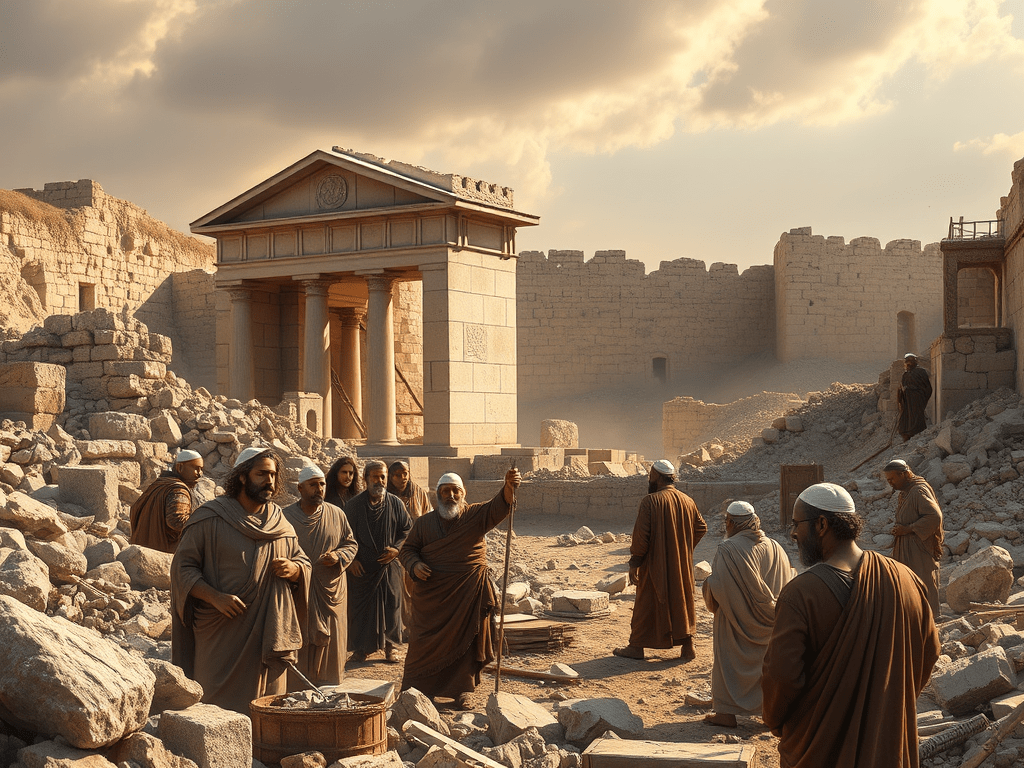
In this passage, the two-and-a-half tribes of Israel whose inheritance lay on the east side of the Jordan River are released by Joshua from their military service (they were helping the other tribes take possession of the Promised Land by subduing the heathen nations), and they headed home. After crossing the river, but before dispersing to their respective lands, they built “an alter of imposing size” near the Jordan River. When the Western tribes caught wind of it, their response was “To WAR!” Why this response, especially considering these men on the other side of the river were their brothers and had just endured many months of battling side-by-side? Because they assumed the altar was in idolatrous defiance of the one and only altar before the Tabernacle where sacrifices could be rightly made to the Lord. They had already seen the result of one man turning away from the Lord (Achan, in chapter seven), and they had no appetite for another episode like that. 

In verses 13 through 20, the leaders of Israel (with their massive army behind them) come and accuse the two-and-a-half tribes of spiritual treason and even offer to have those tribes abandon their possession east of the Jordan to come live with the rest of Israel “if the land of your possession is unclean.” While there was that offer of diplomacy and call to repentance, the majority of the children of Israel stood ready to wipe out nearly a third of their own people. This was how seriously they took obedience to the Lord, and while their motives were sound, their assumptions were misguided. 

Thankfully, the men of the eastern tribes were given the opportunity to defend their actions. They explained that the massive altar was not in fact intended for making sacrifices of any kind, but was actually meant to be a memorial to future generations so it would not be forgotten by the western tribes that their brothers and sisters to the east of the river were of one blood with them, and of one heart towards the Lord. After the explanation, the rest of Israel lowered their bows, spears and swords and said, “Oh, never mind. I guess we rallied tens of thousands of troops and marched for days with the intent of destroying our brothers without just cause.” The text tells us the all the people of Israel were glad and recognized God was among them, which are both very good things; but, I imagine some of the people, especially the leaders, might have felt a little silly having gone through so much effort and made such a show based on faulty assumptions. They could have sent a few leaders to make inquiries and not troubled the entire nation until and unless there was just cause for such action. 

When I read this passage, I laughed a little, but also felt that sting of conviction knowing I have been guilty of all the of the phrases listed in the opening paragraph. I have stirred up strife and injured relationships because I didn’t take time to wait and ask questions, or if I did, I didn’t believe what was said and/or projected motives onto someone. The Bible really does address so many of the struggles we face in our daily lives, and this story from the Old Testament is a great example of that. We can see both from this passage and from other historical and personal events that we should indeed be quick to hear, slow to speak and slow to anger as James 1:19 says. In some rare cases, hasty, misinformed decisions have led to human suffering and death, but more often for us it leads to injured relationships and regret. 

For the sake of our relationships and testimonies, may we, by the power of the Holy Spirit and obedience to the Word of God, be a people marked by careful consideration and intentional conversation. If we follow the advice of God’s Word (and Treebeard – “Don’t be hasty!”), we will be less apt to take up arms and plunge headlong into battles we ought not engage in, injuring others and revealing our own imprudence, impatience and pride. May our cry of “WAR” not be a call to armed conflict, but rather an acronym to help us – Wait, Ask, Respond. 

Confession of a Villain 

Imagine a villain whose evil deeds resulted in the defeat of his nation’s military, the death of 36 innocent soldiers and then death of his entire family. Now imagine if one of the most clear and useful lessons on a vastly important topic could be learned from this villain. Would you be willing to learn from them in spite of all the carnage they produced? Could you value their lesson and not be tempted to let your perceived moral superiority prevent you from acknowledging the truth of their words? Let’s find out. 

In the book of Joshua chapter seven, we learn about a man named Achan who rebelled against God and brought about great calamity on the nation of Israel and his family. If you go back to the preceding chapter, you will read the very familiar story of the fall of Jericho. After the walls crashed down, the people of Israel were told to go in and destroy everything in the city – people, livestock and material goods – everything. However, Achan kept and hid some of the valuables, and in the seventh chapter we read about how God withheld His favor from the whole nation of Israel because of Achan’s sin, causing them to be defeated by the people of the town of Ai. When they lost the battle to this inferior army and fear gripped the nation – including their leader, Joshua, who had been commanded multiple times by God to “be strong and courageous” – they knew something was amiss. There was sin in the camp. 

Rightly, the leaders of Israel beseeched the Lord to help them, and God commanded them to bring all the people before Him the following day at which time He would reveal to them the guilty party. Achan was singled out as the culprit, and his response, even in light of the sure punishment he was to receive, was worth studying – and imitating. 

When we acknowledge our sin, however it was revealed to us – either by the conviction of the Holy Spirit, reading God’s Word, or by means of a brother or sister confronting us (or any combination thereof) – we need to confess it. Although Achan is the villain of the story in Joshua chapter seven, we can certainly learn from his confession. Look at verses 20-21 where it says, “And Achan answered Joshua, ‘Truly I have sinned against the LORD God of Israel, and this is what I did: when I saw among the spoil a beautiful cloak from Shinar, and 200 shekels of silver, and a bar of gold weighing 50 shekels, then I coveted them and took them. And see, they are hidden in the earth inside my tent, with the silver underneath.’”

We see here his confession is rightly-oriented, specific and complete and included four main points. 

1. Acknowledgement of transgression against God. Although Achan “sinned against” other people in that he disobeyed his leadership and caused others to die, his foremost sin was against the Lord. This was also true for David when he stole Uriah’s wife and had him killed. In Psalm 51:4, David says to God, “Against You, You only, have I sinned.” This is certainly not to diminish the impact of our sin on others, nor does it absolve us of the responsibility to confess our sin to one another and seek forgiveness from those we’ve sinned against. The point is that sin is first a vertical issue (between us and God) and then a horizontal issue (between us and others). 

2. Acknowledgement of specific actions, thoughts or words. In the story above, Achan didn’t just say, “I did something bad” or even “I disobeyed God.” Rather, he is very specific, down to the number of coins and weight of the gold he took. I know from my own experience it’s easy to want to obfuscate, downplay or even deceive when it comes to confessing sin. No one enjoys laying all their dirty laundry out for God or anyone else to see. It’s easier to say, “I struggled with lust today,” especially to a spouse or accountability partner. It’s much harder to say, “I gave into the lust of my flesh and committed sexual immorality today by looking at pornography.” Or saying, “I might have accidentally had a little too much to drink last night,” instead of “I demonstrated a complete lack of self-control and became intoxicated last night.” The soft confession is easier, but much less effective at getting to the root of the issue (see the next point), and when we fail to expose the full ugliness of our sin, it eventually callouses our hearts and makes it easier for us to fall into sin rather than to kill it for the hideous beast that it is. 

3. Acknowledgement of motivation. Achan could have just said, “I took x,y and z,” but rather he followed it up by addressing the root sin of covetousness. For us, this is not just saying, “Yeah, I did that bad thing,” but digging into our hearts and being able to add “and this is why I did it.” This is important because identifying root causes of sin can lead to us recognize, confess and kill even more sin, as well as to know how to pray and confess more specifically. Often times root sins manifest themselves in other more visible sins. If I steal something, that’s a sin; but why did I steal it? Did I lack faith in God’s provision? Did I covet what I didn’t have? Do I have a greedy, unbelieving heart? When we confess we should dig down to the next level, and even more levels after that if necessary, to get to the root sin. 

4. Acknowledgement in spite of consequences. The whole down-selection process of God revealing to Joshua the guilty party was very public, and there was no question what it was all about or what the consequences would be. Yet, Achan was bold and clear in his confession. In the same way, we need to be willing to confess sin in spite of the ramifications. I know I’ve been reluctant to confess sin because of embarrassment, the potential impact on relationships, and other reasons. This is really tough, but the longer we let sin fester, the worse it gets and, often times, the more we end up sinning. The fallout of sin, even “small” sins, can be devastating, and almost always the pain extends to others; but we need to value holiness over whatever pain or consequences may come from confession. We also need to trust in God and His people to extend grace and forgiveness when genuine confession and repentance takes place. This is where the beauty of the Gospel really shines – when a sinner confesses their sin before God, and then – as necessary and appropriate – to others, and receives grace, forgiveness, reconciliation and hope that is made possible through the death, burial and resurrection of Jesus Christ. 

This is how the confession of a villain can help us today as we seek to kill sin in our lives and live more pleasing to the Lord: acknowledge our transgressions against God; acknowledge our specific actions, thoughts or words; acknowledge our motivations; and do it in spite of consequences, trusting that the power of the Gospel will prevail and reconciliation with both God and other people will be the end result, to the glory of God. 

Jesus knows

What does it mean to “know” someone or something? Have you ever thought about the word “know” and how our modern use of it has become lazy and overly broad? Let me explain what I mean by that. 

If someone were to ask me, “Hey, do you know the song ‘Africa’ by Toto?” I’d answer, “Sure, I know that song. It’s like, “….something something something … down in Africa.” Now, I can certainly recognize a few aspects of the song – its intro, melody, the singers voice – but my “knowing” of the song is limited more to recognition or awareness. I can’t recite more lyrics than I did above; I don’t know when it was written, or what it’s even about. Sure, I could look all that info up on Wikipedia and work to memorize all the lyrics and melody so I can belt it out on karaoke night, but to be perfectly honest, I don’t want to take the time to do all that. 

It’s exactly that lack of caring that is the difference between “knowing” and “knowing.” We have robbed the meaning of the word “know” of a critical aspect by using it almost exclusively as a synonym for “aware.” Think about it for a moment. How often do you simply mean “I’m aware” when you say “I know”? Futhermore, how many times do we even say “I know” dismissively, like when someone informs you of something that you’re aware of, but don’t care about? We would be better off, I think, if we stopped using “I know” when what we really mean is “I’m aware.”

Why am I saying all this? Because I’m concerned that our misuse of “know” can cause misunderstanding of how Jesus relates to us. It’s true that Jesus, being fully God, is omniscient (He knows all things), but when we think about Jesus knowing us and our thoughts, words, deeds and needs, we often settle for Him simply being aware of them, but not caring about them. This is the real difference and why it’s so important not to diminish the meaning of the word. To truly “know” is at the very least to be both aware and to care. This fuller meaning of the word matters a lot when we contemplate how Jesus relates to us. 

In the second and third chapters of the book of Revelation, Jesus commands John the Apostle to write letters to seven churches that existed in the first century in what is now western Turkey. While each letter contains specific commendations, warnings and encouragements for each individual church, there is a common refrain that ties them all together – Jesus says to each of them “I know…” He knows their suffering, their needs, their sins, their future; and it’s not just an aloof awareness of those things, Jesus cares about them. He cares deeply about His Church, His bride, and just as he cared for those seven churches 2000 years ago, He is aware and cares about His Church today. Let’s take that a step further and acknowledge that Jesus is aware and cares about every one of His children who comprise the Church. He knows us – our thoughts, words deeds and needs. 

What does this mean for us practically? 

With regard to our sinful thoughts, words and deeds, Jesus has proven He is aware and cares by coming to die on the cross for our sins so we don’t have to. He has proven He is aware and cares because His Holy Spirit has come to convict us of sin and empower us to live obediently “in the Spirit” so that our thoughts, words and deeds are pleasing to Him.

With regard to our needs – including suffering and pain – Jesus proves He is aware and cares because He has both given us the Holy Spirit, the Comforter, and has established His Church – the family and people of God – who are called to support, comfort and love one another. Jesus proves He is aware and cares because He has given us His Word, the Bible, to teach, correct, encourage and equip us to live hope and joy-filled lives in the midst of trials and tribulations as we await the promised return of our Lord and Savior with whom we get to spend eternity because He has reconciled us to Himself through His blood. 

Finally, may we all “know” – be aware and care – that “Jesus knows,” and live accordingly in gratitude, love and obedience. 

Can you count the stars?

It must have been a clear night, and the desert air was likely rapidly cooling as darkness overtook the land. The dirt in the valley of the Dead Sea (as it was later called) was still stained with the blood of a massive regional battle between nine armies, and Abram the Hebrew had just successfully completed a subsequent smaller raid/rescue mission. Now, Abram, spoke in a vision with Yahweh – “God Most High, Possessor of heaven and earth” (Gen 14:22). God told Abram, “Fear not … I am your shield; your reward shall be very great.” This was indeed a great encouragement, and was certainly affirmed by the mighty victory God had just enabled and by the fact Abram trusted in God to protect and provide for him. However, Abram’s hope for greatness was not based in earthly riches or a military victory, but in the promise he had received years earlier from Yahweh himself that he, Abram the aged, would be the father of a great people through whom all of the earth would be blessed (Gen 12:3) and who would be as numerous and uncountable “as the dust of the earth” (Gen 13:16). However, his response to God reminding him that, “I am your shield; your reward shall be very great” on this particular night was more of a lament, or even a complaint. 

Abram replied to God in Genesis 15:2, “O, Lord God, what will you give me, for I continue childless..?” and then he went on in verse three, “Behold, you have given me no offspring…” It’s quite a bold indictment. Abram is both spurning his material blessings and (rightly) attributing his lack of a child directly to God, and is basically saying, “Because you have not given me a child, you’ve given me nothing.” Rather than strike Abram down for what appears to be disrespectful ingratitude, God reaffirms His promise to give Abram offspring so numerous that they cannot be counted – in spite of the fact he remained childless and he and his wife were elderly. In this reaffirmation of the promise, God tells his doubtful accuser to “Look toward heaven, and number the stars, if you are able to number them” (Gen 15:5). Of course we know from the next verse that Abram “…believed the Lord, and (the Lord) counted it to him as righteousness,” and that God kept His promise. 

It’s this idea of counting the stars that struck me recently. The first analogy God used of dust was clearly intended to convey that it would be more than an overwhelming task to actually count the number of Abram’s offspring, it would be impossible. For, even if you could somehow count every piece of dust (or grain of sand, as in another analogy God used with Abram), constant geologic and aeolian processes would cause more dust and sand to be created before the existing granules could be counted. However, the second analogy of the stars might have seemed to Abram as remotely possible, even though the Lord implied it was not. 

Think of Abram living in the middle east without a telescope or any other way of knowing that the number of stars just in our galaxy alone far surpasses what even the keenest-visioned person can count, or that some of what he could see shining on a clear night were actually planets and even another galaxy. What he didn’t know when God told him to “look toward heaven” was that the heavens expanded past the solar system and the Milky Way galaxy, and included millions of other galaxies containing billions upon billions of stars. Even if Abram was tempted for a moment to think he could meet God’s challenge of counting the stars, his lack of knowledge and ability would have led him to a calculation that was profoundly insufficient. What might for a moment have seemed like a possibility and answer what might have been a burning question for Abram – “Just how many offspring will I have?” –  was in reality a more daunting task than counting every grain of sand and piece of dust on Earth. 

I think that God’s challenge to Abram is meant to do more than just test his human ability to count the stars and be impressed and encouraged by what he sees. It seems that the most impressive and encouraging aspect of God’s challenge is actually what cannot be seen – the incomprehensible magnitude of the universe that Abram knew nothing about. In the same way, the promise God made to Abram was much, much more than just that he would have a whole lot of progeny. The magnitude of the promise – as we now know – is that Jesus Christ, the Savior of the world, would come from Abram’s bloodline and that the children of Abram (later Abraham) would be more than just physical, but spiritual as all who believe in Jesus Christ and the Gospel are children of Abraham “by faith.” 

I think God’s promises and providence are like that. It seems when God wills and acts the second, third and fourth-order effects (and so on) that ripple into eternity are good and awesome in ways we cannot fathom, and which we will get to spend eternity discovering, praising God more and more at each new bit of understanding and glimpse of God’s master plan. 

There are three encouragements I want to highlight for us today: 1. We can trust God’s promises and providence because history – and hopefully our own experiences – prove God is faithful. 2. “Look toward heaven,” consider that God is working in and through the good and enjoyable as well as the hard and sad in ways you cannot even think or imagine and trust Him “…who is able to do far more abundantly than all that we ask or think, according to the power at work within us” (Ephesians 3:20) 3. Finally, consider Romans 11:33-36. “Oh, the depth and riches and wisdom and knowledge of God! How unsearchable are His judgments and how inscrutable are His ways! ‘For who has known the mind of the Lord, or who has been His counselor? Or who has given a gift to Him that He might be repaid?’ For from Him and through Him and to Him are all things. To Him be glory forever. Amen.”

Paths Unknown

My wife and I met at Hume Lake Christian Camps in the Fall of 2000, and were married there in May of 2003 (that’s the photo). It was there our path began “in the mid-morning of our lives,” and we have continued on it ever since, though it has not followed the course we envisioned. This poem was inspired by our journey thus far, and by the place of significant uncertainty were at right now, waiting to know what’s going to happen next.

It was the mid-morning of our lives, we stood together at the trailhead
The skies above were blue, the sun was shining through the trees
There was hope in our hearts, no reasons to hesitate or to dread
The path was clear, though the horizon obscure, we started with ease

It didn’t take long before something interrupted our young love song
A split in the road, not sure of which way we should go
We prayed to know, we walked unseeing, we didn’t want to be wrong
The winds of circumstances rose, our direction dictated as we felt it blow

We traveled over many a hill and around many a bend
Through many storms and across oceans the path did lead
We were joined by five other travelers before the years were ten
Now there were seven hearts to tend to and seven mouths to feed

The road that looked so easy now more than twenty years ago
Has proven much harder and unpredictable, there is no doubt
Through many toils and dangers, onward yet we go
Taking each step in faith, trusting God to reveal the route

Sometimes I wish I could take to air and see what lies before us
We want to plan, we want to plant, we want to reach a destination
Yet still we move on through valley, through swamp and forest
Roots will have to wait; how long? There is no indication

Though we are blind to what comes next, our Guide certainly is not
So to follow Him with joy and hope and faith, we pray
As we walk we will sing of blessings received, of battles fought
And trust our God to sustain and bless this path we tread each day

Failing for God

Have you ever failed? More specifically, have you ever put forth a lot time and energy into a project or task, only to have it utterly fail? 

In Luke 5:1-11 we read the story of Jesus calling his first disciples to follow him, and it’s a story that begins with failure – not in the sequence of verses, per se. If we place ourselves into the story and imagine the events that led up to the narrative in the text, we can infer that because Simon Peter and his fishing partners failed to catch any fish the night before, they were along the shore tending their nets instead of hawking fresh fish at the local market. As it was, because of their lack of fishing success, they were there as Jesus found himself pressed up against the water line by a crowd of people desiring to hear Him teach. They were there to row Jesus out on one of their boats so he could be heard and seen by more people. In this instance, their failure as fishermen put them in a position to serve Jesus and enable more people to hear the message of the Kingdom. 

Furthermore, I can imagine Simon sitting in the boat listening to the teaching of the man who had recently miraculously healed his mother-in-law. Was he fully engaged, hanging on to Jesus’ words, or was he distracted with the thoughts of how he and his coworkers would not have any income that day? Was he looking out at the Sea of Galilee wondering what they could have done differently to have ensured a better outcome? We may never know. But, what we do know is that he was reluctant to obey Jesus’ command to cast the net into the water once the teaching had concluded. “Master, we toiled all night and took nothing!” he countered. “But, at your word I will let down the nets.” Of course, we know what happened next – a record and net-breaking catch so impressive Peter fell to his knees and exclaimed, “Depart from me, for I am a sinful man, O Lord.”

Once the second boat and crew came out and helped Peter haul this massive catch to the shore, the text tells us they “left everything and followed him.” Left everything – including the most spectacular success of their lives. Hundreds, maybe thousands of fish left for people, birds and other critters to snatch up. Multiple days’ wages left as an offering on the altar of following Jesus. These fishermen went from utter failure to enormous earthly success to true, eternal success. 

What I want to highlight here is that this story depended on what was likely divinely-orchestrated failure in that seasoned fishermen who gave all they had to give and reaped nothing did so in order to gain everything. Their failure led them to be in just the right place to unexpectedly encounter and serve Jesus and others. Their failure presented an opportunity for Jesus to create an even greater contrast between their unfruitful toil and his abundant provision. Their failure led to a recognition of their weakness and God’s greatness. And, ultimately, their failure and then overwhelming success created an even more compelling display of commitment as they walked away from the best catch of their lives to, as Jesus put it, “become fishers of men.”

Maybe this resonates with you. Maybe you’ve experienced failure that God later used to teach, grow and lead you. Or, maybe you’re in the midst of that failure right now and need to be reminded that God’s good plan for you does not depend on your earthly success, and that it’s in our weakness and failures that God moves in powerful ways to show us His goodness, wisdom and faithfulness. Remember to promise of Romans 8:28-30, and remember the failure of three Galilean fishermen – Peter, James and John – whose stories and words are in the Bible to encourage and teach us today to trust in Jesus Christ to turn our failures into fulfillment of his promises and purposes. 

Photo Creator: Anry01 | Credit: Getty Images/iStockphoto

Wildflowers

A few weeks ago I was blessed with the opportunity to take my wife on a weekend getaway near Leavenworth, Wash. The bed a breakfast we stayed at (https://www.cashmeremountainbandb.com/) was owned and operated by a wonderful couple who have been there for more than 20 years – and long enough to have endured a wildfire that tore through their property. The purpose-built B&B, which is also their home, and many of the ponderosa pines (that the owner, Brian, had the foresight to limb) miraculously survived the fire that destroyed almost everything it touched. The hillside northwest of the property that was once covered in thick forest now has large swaths of open areas dotted by sparse trees. Rather than complain about the loss of the beautiful forest, Brian told us about the vibrant wildflowers that now cover the scorched areas, extolling their beauty and choosing to focus on what good came from the ashes.

Brian’s story and perspective inspired a poem and made me consider how the “flames” that are the challenges and pain of life can result in good. This is especially true for God’s children, as we know from Romans 8:28. It is such a comforting hope that God is all-knowing, all-powerful, and, in spite of that, He chooses to love us and has made a way for us to be forgiven of our sins and be reconciled to Him though Jesus Christ. So, we can trust Him to bring all things to a good and joyful conclusion either in this life or in the true and eternal life to come.

I’ll end here with the words of the old hymn, How Firm a Foundation:

“When through fiery trials thy pathway shall lie,
My grace, all sufficient, shall be thy supply;
The flame shall not hurt thee; I only design
Thy dross to consume, and thy gold to refine.”

Look Up

A Poem by David A. Liapis

Pain so sudden, it leaves me stunned

Pain so lasting I cry out “how long?”

Pain so great I despair of life

Pain so present it defies and defines

Darkness that overwhelms me

Darkness that seeps within me

Darkness that seems eternal

Darkness that pursues and crushes hope 

Death that separates friends 

Death that threatens joy

Death that wants the final word

Death our common bond and enemy

This is why my soul is cast down

This is why my eyes refuse to be dry

This is why my body seems a prison

This is why my mind demands a reason

Look up my eyes and behold Him

Look up my soul and believe Him

Look up my heart and love Him

Look up my spirit and join Him

He is the One who bore my pain

He is the Light that shatters darkness 

He is the Life that defeated death

He is the Lord seated on His throne

Look up and see Him

Look up and know Him

Look up and be saved

Look up, my soul, look up