Justifying death

By David A. Liapis

Have you ever been in an ethics class and been confronted with an ethical dilemma exercise? One that I’ve encountered a few times is a doomsday scenario where there are more people than can fit in the only survivable fallout shelter, and the group is tasked with deciding which people would be let in and kept alive to rebuild and repopulate the world, and which would be left outside in the nuclear holocaust to die. Basic facts for each of the individuals are given – gender, age, education level, profession/expertise, and, for some, character traits and medical conditions. The group is then given 30 minutes to decide who lives, who dies and why.

The discussions I’ve been a part of were tumultuous and challenging, and we always ran out time. Then came the interrogation from the instructor. Why did we choose to let the prostitute or mentally handicapped person in or out of the shelter? Why the old scientist or the convicted felon? Right or wrong, we found we all had opinions, and justification, for who we’d let live or die; and if we’re honest with ourselves, we all ascribe value to people based on what we know – or think we know – about them.

Let me ask some tough questions. Do you feel the pain of loss as deeply when someone you don’t know dies? Why not? Are they not a human being with dignity and value? Do you feel as badly when disaster strikes some country across the ocean as you do for your home country? Why? Are not 10,000 foreigners as deserving of life and health as everyone else (theological answer aside)? Have you ever questioned why God would let a “good” person die instead of someone you deemed “bad”?

I am still grieving along with many people the loss of a man whom I was friends with years ago and whose extended family I have remained connected with over the years. This man was hero in many ways – a fireman, a husband, a father, a God-fearing, patriotic American. He was a young man who was full of life and promise and upon whom his pregnant wife and four other children depended. And yet, God took home to heaven “before his time” after losing a painful and tragic battle with a brain tumor. Now his widow has to deal with her own emotional turmoil in additional to that of her four little children and be ready to bring a fifth, now fatherless, child into the world. There are fewer more tragic scenarios than this one.

Sometimes, like now, we might wish we were the classroom instructor grilling God about why he chooses to let some “evil” people live and prosper while other, seemingly more “worthy,” people die. We want the authority to demand God’s justification for his choice and we question the fairness or wisdom of it. But, we cannot. Instead, we have two options: 1. Doubt the goodness and wisdom of the God who is supposed to be all knowing, all powerful and the very definition of love; or 2. Trust in that same God even though his ways are not our ways and believe he will somehow heal the pain, mend the brokenness and work all things together for good in his time.

There is only one reason anyone ever chooses option two – the Gospel of Jesus Christ and the hope we have in the resurrection. The Bible tells us that because Jesus died on the cross for our sins and rose again to life that death has been defeated and its sting has been removed. Only those who trust in Jesus can find hope in the midst of such unspeakable sorrow. Only those who know Jesus as Savior can say, “To live is Christ, and to die is gain.”

Without these amazing truths that undergird our faith, we are hopeless; pain and suffering are meaningless; and life is a cruel joke that ends in sorrow and death. But, oh Christian, rejoice that not only our lives, but even our deaths have meaning! Rejoice that death to us is but a door to the eternal presence of our Lord! Triumph in the truth that Jesus has turned death on its head, and that one day all God’s adopted children with be gathered together to praise the triune God for eternity! To him be the power, and the glory forever! Amen.

Tune our hearts to sing God’s praise

By David A. Liapis

Come Thou Fount of Every Blessing is one of the most well-known hymns, making it into numerous “top 10” or “top 25” hymns of all time lists – and for good reason. The lyrics of this song are rich and compelling, and I want to do two things with them in this post. The first is to tease out the idea of God “tuning” our hearts to sing His praise individually and corporately. The second is to attempt to “interpret” and rewrite the lyrics of all the verses in a way that will hopefully make them resonate even more.

Have you ever seen musicians – specifically the guitarists or string players – plucking one string at a time and then adjusting the little knobs at the top of their instruments, one after another? Have you seen them do this before the church services or concerts begin, and sometimes even in between songs? Or how about this: have you ever heard what it’s like when someone doesn’t tune their instrument properly? Even a single out-of-tune string can be enough to ruin the whole song/set.

As we gather at church, we come as broken, sinful, distracted people whose hearts are often far from being ready to boldly approach the throne of God and offer sacrifices of praise. Our hearts are out of tune, and, just like an out-of-tune instrument, what comes out can range from slightly displeasing to downright terrible. What Come Thou Fount of Every Blessing is asking is for God to prepare our hearts to sing out of an overflow of appreciation for the unmerited grace of God. This “tuning” can happen in various ways: confession of sin (1 John 1:9), reconciliation with others (Matthew 5:23), recognition of God’s holiness and our depravity, thankfulness, and serving others, to name a few.

While the preparation our individual hearts is important, there’s also a corporate aspect to the “tuning of our hearts” together that can be illustrated well with the different ways to tune an instrument. You can tune an instrument to itself and make it sound great – so long as you don’t try to play along with any other instruments. In the same way, we can try to tune our hearts to ourselves and sound pretty good in isolation; but when we come together with others, what happens then?

There’s a reason we are told not to forsake the assembling of ourselves together (Hebrews 10:25) and to teach and admonish one another in “in all wisdom, singing psalms and hymns and spiritual songs” (Colossians 3:16). There’s safety and encouragement that comes from being “in harmony” with one another (Romans 12:16 and 15:5; Colossians 3:14), and the only way to find this kind of harmony is in a community built around the Gospel of Jesus Christ.

The bottom line is this: we need God to “tune” our hearts both individually and corporately, and we need each other to as the “band of Christ” to proclaim to a lost and dying world the grace and love of a Savior worth singing about.

Now, here is my attempt to “interpret,” or paraphrase, the lyrics to Come Thou Fount of Every Blessing in an effort to draw out some of the rich themes and meanings. Here we go:

Verse 1

Come, Giver of all good things, prepare my heart to proclaim your grace;

Your unending mercy is worthy of loud, eternal praise;

Teach me to sing in concert with the saints and angels in heaven;

I am determined to praise the glorious display of God’s great love

Verse 2

I will tell of the wonderful things God has done!

Only by God’s help alone have I made it this far,

And it’s only by God’s gracious providence I will get to heaven;

Jesus pursued me even while I was an enemy of God, doing whatever was right in my own eyes;

Jesus shed His blood on the cross to save me from God’s wrath

Verse 3

I owe Jesus more than I could ever repay for the grace He shows me every day

May God restrain my unfaithful heart to Himself with chains of grace

I am often distracted and drift from your paths, Oh Lord,

I too often foolishly turn away from the God I love

Lord, take hold of my heart and keep it secure; make me ready to be in Your holy presence

The scariest words in the Bible

By David A. Liapis

Thoughts on Matthew 7:21-23

I believe this passage contains the most terrifying words in the entire Bible. They are so frightening for two primary reasons. The first is because they are a final verdict of eternal condemnation to those who hear them. If all Jesus said was what is contained in the last verse, it really wouldn’t be unexpected – “I never knew you; depart from me, you workers of lawlessness.” Lawless sinners being cast into hell because of their wickedness and rejection of Jesus is a truth found throughout the Bible, so why should we be surprised? After all, that’s what everyone who rejects the Gospel not only deserves, but chooses. It goes back to a couple sections ago where Jesus calls us to “Enter by the narrow way,” but those who choose the wide and easy path to destruction “are many.”

The second reason, and what makes these words so terrifying is that “I never knew you…” is spoken to people who called Jesus “Lord” and ministered in his name. These are people who did many things we would put into the category of “The things only ‘Christians’ do” – casting out demons, prophesying, performing miracles – all in the name of Jesus. If people doing these kinds of things can be false, what about people who do other “lesser” deeds in the name of Jesus – teaching, singing, serving in children’s ministry, working at the pregnancy resource center or food closet…

We must remember the theme of the Sermon on the Mount as we approach this passage. Jesus isn’t saying no one can be confident in their salvation and that we will all have to wait until it’s too late to find out if we made the cut. Jesus has spent the past three chapters worth of text condemning religiosity and making the point that it’s about the condition of our hearts more than it is about our actions. However, let’s pause and discuss the human heart for a moment.

In spite of what our culture would like to believe – that everyone is basically good and has a good heart – the Bible says otherwise. It says our default is a wicked, stone heart. Jeremiah the Prophet says, “The heart is deceitful above all things, and desperately sick; who can understand it?” (17:9) And Paul the Apostle says in Romans 3:10-12, “As it is written, ‘None is righteous, no, not one; no one understands; no one seeks for God. All have turned aside; together they have become worthless; no one does good, not even one.’” That’s a pretty bleak description of us in our natural, sinful condition. But, there’s hope.

God, speaking through Ezekiel the Prophet says, “And I will give you a new heart, and a new spirit I will put within you. And I will remove the heart of stone from your flesh and give you a heart of flesh.” (36:26) There’s a theological word for that – regeneration. Ultimately, there is only one who can make a dead heart alive, and that’s God.

Now, to connect the passage at hand with our hearts. Since the Bible tells us all our hearts are stone, or dead, from birth (the doctrine of Total Depravity), and only God can make them flesh, or alive, then it’s only by God’s intervention (grace) that we can obey the words of Jesus from the Sermon on the Mount. It follows then that those who have good hearts do “The things only ‘Christians’ do” out of an overflow of love-fueled obedience and faith rather than to be “seen by men.” Most importantly, those who have been given new hearts and made alive with Christ are those whom Jesus knows and who will hear, “Well done, good and faithful servant. Enter into the joy of your Lord” when the end comes.

So, the big question that to this point I have not attempted to answer is: how do we know if we are those who are known by Christ versus those who say “Lord, Lord,” but are not? One answer I’ve heard is “listen to your heart,” which of course, based on the verses above, is folly. Another is to judge by fruit, or actions, as Jesus said in the previous verses (“Thus you will recognize them by their fruits”). However, the people who will hear “I never knew you” did things we’d look at and say, “that’s good fruit. They must be saved.” Confused yet?

I wish there were a simple, foolproof test to determine someone’s status with God, but there’s not. There are many verses in the Bible that provide criteria and indicators such as being filled with the Holy Spirit, living in a manner pleasing to the Lord (obedience and righteousness), and the Spirit of adoption that calls out to God as our Father, to name a few. We are also given warnings to examine ourselves (2 Corinthians 13:5), to “work out [our] own salvation in fear and trembling” (Philippians 2:12). This all takes deliberate effort.

So, how we can have confidence in our standing before God and not have to live in fear that we will be among those who have deceived themselves and others? How would I respond to the question, “how do you know you are saved?” My answer is this:

I know I am saved not because of one event, such as reciting the Sinner’s Prayer, raising my hand during an altar call or being baptized, but because of a combination of many factors – pieces of evidence – that give me the assurance I am known and loved by Jesus Christ. What are these proofs? They are a life marked not by sinless perfection, but a continual struggle against the flesh and sin (sanctification); godly sorrow (not guilt or condemnation) over my sin that leads to repentance; a noticeable change in the desires of my heart; passion for peace, reconciliation and forgiveness; and, finally, a love for the Word of God and a desire to be with and speak to my Savior. By no means am I perfect in any of these, and there have been times of stagnation; but God is the “Author and Finisher” of my faith “And I am sure of this, that he who began a good work in [me] will bring it to completion at the day of Jesus Christ.” (Phil 1:6)

There’s a healthy tension that must be found between living in fear and living with false assurance. Do as the Bible says and examine yourself. Be honest. Be even brutal in your assessment of yourself; but don’t stop there. As we come to see ourselves for who we really are and how utterly depraved and wicked we are, we must look to the cross of Christ and the hope he offers us. As the author of the hymn Amazing Grace said, “Although my memory’s fading, I remember two things very clearly: I am a great sinner and Christ is a great Savior.”

Hunt the wolves, know the Shepherd

By David A. Liapis

Thoughts on Matthew 7:15

Remember that time Jesus said “judge not, that you be not judged”? Remember my post about that passage and how Jesus was getting at the fact we need to conduct honest self-assessments rather than focusing on others? Remember also how many other verses tell us to be discerning, to “test the spirits” (1 John 4:1), and to judge those inside the Church, not those outside (1 Corinthians 5:12)? Here is another passage, not far from the “judge not” one, where we are again instructed to judge.

Let’s settle one thing before we move on. How we understand/define the word “judge” shapes our understanding of this and all other related passages. One way we define “judge” is passing a judgment and sentence/condemnation. Unless we are given that type of authority, that’s not what the Bible is advocating we do. That’s also the kind of judgmental attitude that’s so repulsive to so many people. It’s not our job as Christians to pronounce condemnation upon people in that way. It’s Jesus who will judge the living and the dead. Let me be clear, this is not the same as calling out sin for what it is and lovingly pointing people to the hope found in Jesus Christ for salvation from the wrath of God.

The other way we interpret “judge” means to weigh evidence or compare/contrast something and then make a determination of character, value, intent, etc. That’s what Jesus is getting at in this passage.

Jesus starts with the word “beware,” but how can we know what or whom to beware of unless we make a determination – a judgment – about something or someone? Jesus then goes on to tell us how to judge (in this case, to identify false prophets). He tells us we will know them by their fruits. He also warns in Matthew 24:11 that “many false prophets will arise.” Therefore, we must be on our guard.

What does a false prophet, or ravenous wolf, look like? I could toss out some names of people I believe qualify, but that’s not the point. The point is that we come to the “Good Shepherd” so well that we have no problem identifying what a wolf in sheep’s clothing or a bad tree looks like. Those prophets/teachers who bear good, Christ-honoring fruit should not be hard to differentiate from false prophets/teachers who bear bad fruit and will be “cut down and thrown into the fire” (hell). One fruit I will suggest is riches. When someone who is supposedly representing Jesus Christ flaunts the riches they’ve obtained from their followers and teaches that such opulence is evidence of God’s favor are more than likely wolves. I’ll just leave that one there.

Our responsibility is to be discerning and to reject false prophets/teachers. Sadly, many have been and will be led astray by wolves in sheep’s clothing because they don’t know the voice of the Good Shepherd. There are many voices in this world trying to distract, discourage and, ultimately, destroy us. May we learn to discern (and obey) the voice of Jesus Christ for ourselves, and then help others to do the same.

War of words, war on words

By David A. Liapis

We are a nation at war. This war is being waged not on blood-stained battlefields where thousands of soldiers meet a tragic demise, but rather in the minds of our young people. The battle lines have been clearly drawn between left and right ideologies, and there is seemingly no middle ground or willingness to compromise or call a truce.

It’s not unusual or unexpected for the meanings of words to change over time. One only has to open and read (or assay to read) a 1611 King James version of the Holy Bible or one of Shakespeare’s plays to be confronted with divers utterances that can befuddle and vex even the most astute person who is wont to trow themselves a lexicon maven.

Word usage and definitions changing over time is not an unusual or new phenomenon. Words such as many from the previous paragraph as well as “pot,” “weed” and “sick” are some examples of words that have have fallen out of common speech or have multiple meanings in today’s American culture. This is not always a bad thing, nor can it be stopped. However, there are changes being made so rapidly and drastically to certain words right now that to ignore and allow them is harmful to our fundamental freedoms of speech and religion. Here are some examples:

Phobia. Dictionary meaning: An extreme or irrational fear of or aversion to something. New meaning: A condition experienced when a person simply dislikes or disagrees with something or someone.

Hate – Dictionary meaning: Intense or passionate dislike. New meaning: Any sentiment, word or action (even a facial expression) that contradicts the ideology or hurts the feelings of another person.

Tolerance – Dictionary meaning: The ability or willingness to tolerate something, in particular the existence of opinions or behavior that one does not necessarily agree with. New meaning: Something demanded by one group or person, but not extended or reciprocated to those with differing beliefs or opinions.

Bigot – Dictionary meaning: A person who is intolerant toward those holding different opinions. New meaning: Anyone on the opposing side of the political spectrum, especially if they are religious, who holds firm to their convictions.

Protest – Dictionary meaning: An organized public demonstration expressing strong objection to a policy or course of action adopted by those in authority. New meaning: An opportunity to show outrage (even if it’s faux) using any method necessary, to include violence, slander, theft, vandalism, profanity or other explicit, immoral and even illegal means.

Misogynist – Dictionary meaning: Someone with a dislike of, contempt for, or ingrained prejudice against women. New meaning: Anyone who does not support aggressive feminism, and especially anyone who believes in complementarianism (that men and women have inherently different and distinct roles and abilities).

Racism – Dictionary meaning: Prejudice, discrimination, or antagonism directed against someone of a different race based on the belief that one’s own race is superior. New meaning: Any negatively construed word or action, regardless of how legal, moral or ethical, against a person of any ethnic background other than Anglo-Saxon.

Violence – Dictionary meaning: Behavior involving physical force intended to hurt, damage, or kill someone or something. New meaning: Any word or action that contradicts a person’s ideology or makes them feel badly, no matter how moral, ethical or truthful said actions or words might be.

We are losing the battle to mainstream media and social media to maintain the true and historical definitions of key words. As the saying goes, if you say something loud enough and long enough, it becomes true. Too bad for those who seek to change or redefine truth by shouting down anyone who attempts to contradict them, the court of public opinion and popular consensus will never change what is ultimately and finally true – God and His Word. We may lose the battle, but He has won the war. In the meantime, fight the good fight and lovingly counter error whenever you can.

The masculinity of Jesus Christ

By David A. Liapis

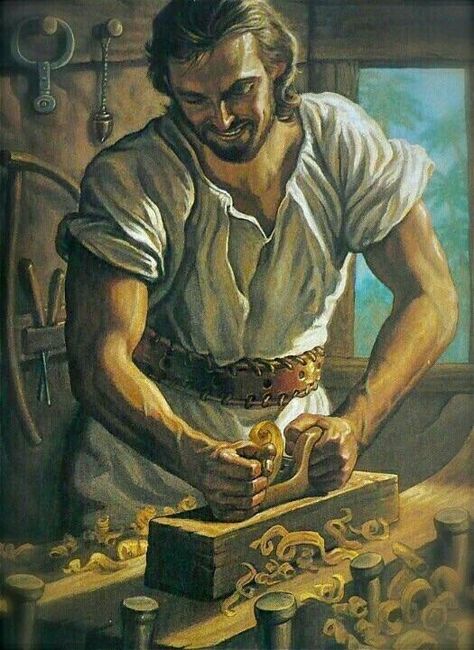
There are lots of images, caricatures and misnomers about who and what kind of person Jesus Christ was when he walked the earth 2000 years ago. Some imagine a fair-skinned, blue-eyed, flowing hair Jesus that looks like he would have fit in better at Woodstock in the 1970s than in first century Judea. Others imagine Jesus to have been just a soft-handed, “meek and mild” man who sat around saying wise and profound things. However, the Bible shows us that Jesus was not a namby-pamby adult male in need of a haircut and more sun.

Jesus was a man’s man. He had a beard (before it was cool). He had rough, calloused hands from years of woodworking. He may have even had a few remaining deep splinters from some of the thousands of pieces of wood he had shaped into something useful over the 25-ish years he probably spent working as a carpenter. He was muscular from lifting planks and logs. His arms strong and rippling from splitting, sawing and hammering. He knew all about the “speck in the eye” because of all the nights he went to sleep with flecks of sawdust he just couldn’t get out of his eyes.

Jesus knew how to make a “cord of whips” … and use it! He laughed in the face of danger, sleeping through tempests and standing tall in the face of crowds seething with rage and ready to stone him or cast him off cliffs. Jesus knew stuff. He knew about shepherding, farming, history, warfare, religion and winemaking. He could speak in public, lead and teach people, make a good joke, give a good jab, sing songs, cook for his friends, find his way around without a map, walk for miles a day, and sleep out in the open country.

Jesus was a man’s man. Tougher than nails, wiser than Solomon, always honest, and the embodiment of true masculinity. He was a M.A.N. – Masculine And Nice. He was considerate, compassionate, caring, emotive and passionate. He yelled, he laughed, he wept, he encouraged, he called out evil, he proclaimed what’s good.

Jesus cared deeply for women and showed them compassion and respect in spite of cultural norms. Jesus associated with the “deplorables” of society, caring more about people than what others thought of him. Jesus didn’t shy away from confrontation or conflict, but he used his words as his only weapon. Jesus valued children and rebuked those who didn’t. Jesus championed justice and spoke the truth, even when it wasn’t popular.

Jesus wasn’t just a man’s man. He’s THE man’s man. My aspiration in life is to emulate him as much as I can, and to encourage my sons, and every other man I know or don’t know, to do the same. Our world doesn’t need to be rid of masculinity, it needs more of it. Not the toxic, proud, womanizing, selfish, violent kind; but the kind that Jesus modeled. The kind that makes a man a M.A.N.

I met Jesus at the crossroads

By David A. Liapis

Thoughts on Matthew 7:13

There was a song I learned in children’s church more than 30 years ago that I think of when I read this passage, and I can still sing today. The song started with line, “I met Jesus at the crossroads, where the two ways meet,” and, like the rest of the song, was accompanied by poster-board illustrations. The image of the two roads is burned into my memory – one straight and narrow, sparse with people on their way to heaven; the other broad and winding, full of laughing people headed for destruction.

The next few lines go on, “Satan, too, was standing there. He said ‘Come this way. Lots and lots of pleasures I will give to you today!’” The only things I recall about this portion of the poster board were drawings of hypodermic needles. “Why in the world,” I thought as a young kid, “would getting shots be included with the ‘pleasures’ Satan offered?” The choice to follow Jesus was an easy one if choosing the broad path meant getting shots!

We may laugh at that, but there’s a reality I didn’t account for at that age, nor did the song mention. The rest of the song goes like this:

But I said “NO! There’s Jesus here

See what He offers me:

Down here, my sins forgiven

Up there, my home in heaven

Praise God, that’s the way for me!”

I understood the way that leads to life is narrow and “those who find it are few.” However, the part about the way being “hard,” as Jesus states in the verses from which this song was derived, was not really discussed. Even though my church was by no means overtly teaching a false health, wealth and prosperity “gospel,” I, at least, was led to believe that following Jesus meant that life was going to be pretty much a smooth ride on the narrow path all the way to glory.

I’m not saying this song is bad. I like it still, and it has caused me to think about my actions and choices over the years (as goofy as that sounds). However, I believe there are some missing lines that could make it more true to the passage at hand.

I met Jesus at the crossroads

Where the two ways meet

I chose that day to follow Him

When He said “Come this way

Trials and tribulations I promise you today

And He said “GO!” into the world

Give up all to follow me

Give up your worldly passions

Give up your ease and comfort

Lay down your life and follow me!

Those who come to Jesus so he will fix their problems in this life and grant them entrance into the kingdom of heaven in the next will inevitably do one of two things: learn and embrace the truth that Jesus’ followers will suffer and bear reproach for his name, or fall away and ultimately reject Jesus and love the world instead. Second Timothy 3:12 says, “Indeed, all who desire to a godly life in Christ Jesus will be persecuted,” while Matthew 13:20-21 say (of the soils in Jesus’ parable), “As for what was sown on rocky ground, this is the one who hears the word and immediately receives it with joy, yet he has no root in himself, but endures for a while, and when tribulation or persecution arises on account of the word, immediately he falls away.”

There’s no ignoring or escaping the fact that we will be confronted with derision, rejection, and persecution if we live lives in accordance with God’s will. The darkness hates the light because it exposes “their evil deeds” (John 3:20), and we are called to “walk in the light as he is in the light.” Here’s the bottom line: Jesus promises us hardship and difficulty in this life. However, that’s not all he promises us.

Jesus also promised to send the Holy Spirit (John 14:26 and Acts 1:8), which he did (Acts 2); and Jesus promised to never leave nor forsake us (Hebrews 13:5). Paul the Apostle also tells us that whatever we endure in this life for the sake of Christ is but “light momentary affliction” that “is preparing for us an eternal weight of glory beyond all comparison.” (2 Corinthians 4:17)

If you’re on the narrow path and are enduring the reproach of the world, be encouraged by the words of Peter: “If you are insulted for the name of Christ, you are blessed, because the Spirit of glory and of God rests upon you … if anyone suffers as a Christian, let him not be ashamed, but let him glorify God in that name.”

If you’re not yet on the narrow path that leads to life and are worried about what you’ll have to give up and endure to follow Jesus, consider well the words of Paul: “But whatever gain I had, I counted as loss for the sake of Christ. Indeed, I count everything as loss because of the surpassing worth of knowing Christ Jesus my Lord.” Ease and pleasure in this life are fleeting, but the end is eternal destruction. May you answer the call to repent and trust in Jesus, and say to Satan:

“NO! There’s Jesus here

See what He offers me:

Down here, my sins forgiven

Up there, my home in heaven

Praise God, that’s enough for me!”

Letting selfishness guide love?

By David A. Liapis

Thoughts on Matthew 7:12

One thing to keep in mind while reading this or any passage contained in the Bible is that chapter and verse numbers were inserted by editors years after the original texts were written. Since they were not inspired they are not perfect, and we sometimes find places where the chapter/verse breaks don’t make a lot of sense. One even more recent addition to many Bibles are the section headings – those bolded summaries of each group of verses many people unwittingly allow to serve as authoritative commentary or interpretation. Those phrases can be helpful in finding a particular section, but they, like chapters and verses, are not inerrant and are not always ideally used. The verse at hand, the “Golden Rule,” is one that both seems oddly placed within the Sermon on the Mount and, at least in the English Standard Version, is not separated from the next verse that appears very disconnected (so much so I will discuss it in a separate post).

As has been pointed out many times in previous posts on Matthew, it’s helpful to read the parallel passage, in this case, in Luke 6:17-49 to aid our understanding. I highly encourage you to read it now before continuing here. Really.

As you can see, Luke ties together his summary of the Beatitudes – Jesus’ words about loving, judging, lending, giving and blessing – and throws the “Golden Rule” right into the middle of it all. Matthew, on the other hand, seems to add it as a sort of summary of a long section he assumes we will have remembered, starting it with “so” in order to connect it to what preceded it. While the overall point of the verse doesn’t change based on what immediately surrounds it, Luke provides more concise context for us to know what types of situations Jesus had in mind when he gave the command.

What Matthew does differently from Luke that is significant is that he includes Jesus’ statement that obedience to this one command “sums up the Law and Prophets.” Matthew’s Gospel is intended for a Jewish audience with the goal of convincing them that Jesus of Nazareth is the Messiah. This colors the entire book and influenced what Matthew incorporated into the text, including this comment about the Law and Prophets. Throughout this sermon, Jesus argued that the Jews misunderstood the intent of the Law and presented simplified, yet deeper interpretations that drove to the “heart of the matter.” This verse is no different.

To say that doing to others as we want them to do to us sums up all the commands of the Old Testament is a very bold statement. However, this theme, which is basically “love others,” is continued throughout the New Testament. Paul the Apostle goes so far as to say exercising gifts of the Holy Spirit, having faith to move mountains and even giving ourselves up “to be burned” amounts to nothing if we “have not love.” What Jesus offers us with the “Golden Rule” is a simple formula to determine what loving our neighbor looks like. He does this because he knows how quick we are to quibble, justify, equivocate and make up excuses when it comes to loving others. He essentially tells us to be honest with ourselves about how we’d like others to treat us (because he knows our bent is selfishness) and do our part to make that a reality for others. If we all did this all the time, we’d find our needs being fulfilled while we would be simultaneously fulfilling the needs of others.

Magic – to shun, or not to shun?

By David A. Liapis

SPOILER ALERT: This post is more of a “What-do-you-think-about-this?” kind of post versus one that offers some closing point and life application. In fact, this post could stir up a bit of controversy. I’m not here to pass any judgment on fellow Believers who hold different views or to accuse any brothers or sisters of being less holy. Rather, this is me openly admitting I don’t have everything figured out, and sharing where I’m at in this process. Okay, now that we’re clear on that…

Something that I’ve been wrestling with for about a year now has been to what extent, or even if, Christians should be involved with, consume media containing, or generally approve of magic. I have witnessed or read/heard about people who fall on various points on this spectrum over the years, and I have been a part of the inconsistent crowd that rejected Harry Potter but embraced Lord of the Rings and The Chronicles of Narnia. I have to admit, I always felt a bit stupid trying to justify why one magic-based series was fine and another wasn’t. Maybe if someone wrote a book about finding Christ in Harry Potter, many in the Evangelical church would welcome in the boy wizard from Hogwarts as they did Gandalf the Grey and look for veiled Gospel allegories.

For many years, the LOTR/Hobbit saga and Narnia series have been among my favorite books and movies. They are epic in the most literal sense of that word. They are exciting and fun to watch as good triumphs against all odds over seemingly overwhelming evil. Furthermore, my kids have grown up, as I did, relishing Disney cartoons with magic-wielding characters from mice to long-haired damsels to blue singing genies.

The theme of magic has not been one that elicited any substantial spiritual revulsion on my part until recently. There are a few parts in some of the aforementioned movies that caused discomfort, particularly in the Hobbit films, where incantations and other dark languages were being spoken (even by the “good” guys). Initially, I suppressed those feelings because I didn’t want to begin to consider what implications they might have for my continued enjoyment of the rest of the movies. Then, about a year ago, I believe the Lord led me to a passage of Scripture I had not read in quite some time.

One of the things God addressed with the Israelites as He was preparing them to enter into the Promised Land of Canaan was essentially what we might sum up in one word as “magic.” He said in Deuteronomy 18: 10-13,

When you come into the land that the Lord your God is giving you, you shall not learn to follow the abominable practices of those nations. There shall not be found among you anyone who burns his son or his daughter as an offering, anyone who practices divination or tells fortunes or interprets omens, or a sorcerer or a charmer or a medium or a necromancer or one who inquires of the dead, for whoever does these things is an abomination to the Lord. And because of these abominations the Lord your God is driving them out before you. You shall be blameless before the Lord your God.

“Well, that’s the Old Testament,” some may argue. Others I’ve spoken with have said, “Well, sure, but that’s not ‘innocent’ stuff like ‘good magic’ or Disney.” But is it really? How are we to know where the line is between what’s acceptable or not to the Lord? If all the things listed in those verses above are “an abomination” (hated, disliked) by God, then is it ok for us to willingly fill our minds and expend our resources via books, movies, toys, theme parks and other mediums that promote and glorify them? If God hates something so intensely that He set forth death as a punishment for those who practiced them, should we not flee from that thing, whatever it may be?

My response, my choice that I have made for my family is that we will not watch, read or otherwise support movies and books that condone magic. It has not been easy. We constantly run the risk of offending friends who don’t share similar convictions, and my kids sometimes have to suggest other movies when with a group of kids choosing what to watch. Maybe I’m wrong, and in time God will reveal that to me. But, maybe I’m not. Since I don’t know for sure, I’ve decided to err on the side of caution. I realize this could sound very legalistic, and I understand that completely. However, legalism is when we obey a man-made restriction or requirement that either takes something God said to an extreme or is something above and beyond what the Bible says. In the case of magic, God actually has said something about it; but, our culture has said something completely different about what’s acceptable. So, let me ask, is abstaining from magic books and movies really legalism, or does it only seem so because of how counter-cultural it is (even within Christian culture)?

The way I see it, magic is counterfeit supernatural. We long for manifestations of the supernatural, I think, because a reality exists beyond our typical comprehension that is supernatural and to which there remains a faint echo. Magic is counterfeit because it’s intended to satisfy a longing that can only be truly filled by the wonders of God and the new creation that awaits those who have put their trust in Jesus Christ for the forgiveness of sins.

There’s also the fact that Jesus’ miracles (and those of the Apostles) can seem to children like magic, which they are not. They are demonstrations of the power of God. Magic is but a counterfeit. One of my children asked me a few months back to explain how what Jesus did was different than what a wizard or magician can do. I suspect they are not the only child who has questioned the difference. Consider as well the “magic” of Santa Claus and how many attributes he supposedly shares with our omnipotent, omnipresent God. Santa is yet another widely embraced and celebrated supernatural counterfeit (and one that many parents lie to their children about and then eventually have to explain how God is real and Santa isn’t).

There’s no lack of YouTube videos of people warning of the Satanic dangers of Walt Disney (who some say was a 33-degree Freemason and promoter of witchcraft), Harry Potter and other magic books and movies. Are some of these people kooky? Sure. Are some of their beliefs fringe? Absolutely. Does that mean everything they say is false? No.

So, what do I do with all this information? How can I strike a proper balance? Can I reject some of Disney’s movies and enjoy others? Can I read C.S. Lewis’ books about God and theology even though he might be largely to blame for making magic acceptable to Christians? Here’s one for you: I am sinful. Does that mean you should never read any of my blog posts?

I guess it really comes down to seeking God’s leading and discernment through His Holy Spirit and doing what Paul admonishes us to do in Romans 12:9 – “Let love be genuine. Abhor what is evil; hold fast to what is good.” Maybe God will reveal to me someday that I have needlessly withheld fun entertainment from my family. Then again, maybe someday I’ll hear, “Well done, good and faithful servant.” At the worst, our lives are not very magical. At best, we are drawing nearer to the heart of the God.

What are your thoughts?


Ask and ye shall receive?

By David A. Liapis

Thoughts on Matthew 7:7-11

“Ask, and it will be given to you…” Will it, though? How many of us have asked for things “in Jesus’ name” and not received them? We have asked for healing that didn’t happen. We have asked for material goods that were not provided. We have asked for leaders who were not elected. We have asked for the end of wars and evil practices that have not ceased. So, how can Jesus say that if we ask, seek and knock that we will receive?

Some would say it’s because we lack faith, and so God does not answer us (James 1:6-8). Others would say we don’t receive that for which we ask because we do so with impure motives (James 4:3). Still others would contend that we don’t get what we ask for because we’re not asking in accordance with Jesus’ will (1 John 5:14-15). While all of these are Biblical reasons and any one, or combination thereof, could be a contributing factor, there’s no single attitude, prayer, phrase or posture that will force God to act.

The question still remains though of whether or not Jesus was being honest with his audience. Did he make a promise he could not keep? Most certainly not!

It’s very instructive, as discussed in the past, to look at any parallel passages that exist in the Gospels as well as the collective narrative of the Bible. In this case, there’s a parallel passage in Luke 11:5-13. Here, the “it” that is given in Matthew chapter seven is clarified, and it’s the gift of the Holy Spirit. Jesus isn’t just tossing out there the possibility of being given anything and everything we desire and ask God for. Rather, in harmony with the theme of the kingdom of God in the Sermon on the Mount, Jesus is saying that those who ask for the Holy Spirit (in other words, the seal of salvation by faith in Jesus) will receive him.

This fact very evident in John 14 where we find a verse that says, “Whatever you ask in my name, this I will do, that the Father may be glorified in the Son.” Again, this is not a promise that if we ask for new cars, good-looking spouses, health, wealth and prosperity “in the name of Jesus” that God is obligated to give us those things. Rather, the rest of the John 14 leaves no doubt it’s the gifting of the Holy Spirit Jesus is referencing. Here in this passage in Matthew Jesus makes the point that if we, “evil” people, know how to give good things to our children, that God, who is the infinitely good Father, knows how to give what’s good to us. As mentioned, the parallel passage in Luke identifies that ultimate good as the Holy Spirit, without whom we would not be saved.

What does this mean for us? It means that we should not be shaken in our faith when we pray for something we don’t receive, because we have a good Father in heaven who knows what we need before we even ask (Matthew 6:8). And, to draw that out more, our Father knows what we “need,” so we can trust that anything we don’t receive is not what he deems best for us. Many times, what’s best for us are the very things we don’t want. God’s purpose is to save, sanctify and bring his children into glory with him, not to give us what we think would make for our “best life now.” The Apostle Paul talks a lot about the life to come and how even immense suffering and need in this life is but “light momentary affliction” (2 Corinthians 4:17) compared to what it to come for those who trust in Jesus Christ for salvation.

The challenge for us today is to trust in the sovereignty and goodness of God in all things. May the Lord, by the power of the Holy Spirit, enable us to trust our Father’s plan and purposes and conform our will to his.