I awoke with a jolt from a dream last night. In this dream, I was in a house with some other people, exploring the various rooms. At one point, we were in a basement area and could sense the presence of evil. My viewpoint was kind of a mixture of first-person and “out-of-body,” and from the latter perspective I was able to actually see and hear some of these demons, for lack of a better description. I don’t recall the exact details; I just remember I started to sing a verse from a well-known hymn as a way to counter the evil presence. As I sang, we felt the darkness start to flee, and there was a sense of victory. Then it happened.
As I was singing, I turned and saw a closet. In mid-verse, I opened the door and was immediately overwhelmed by a more powerful evil presence. This is the point where I jolted awake and, whether it was in my “dream mind” or awakened mind, I don’t know, I was surprised that this dark force had so easily overcome me while I was boldly singing a hymn about Almighty God. It was in that moment I was reminded of an obvious truth that I had lost sight of: not all verses are created equal.
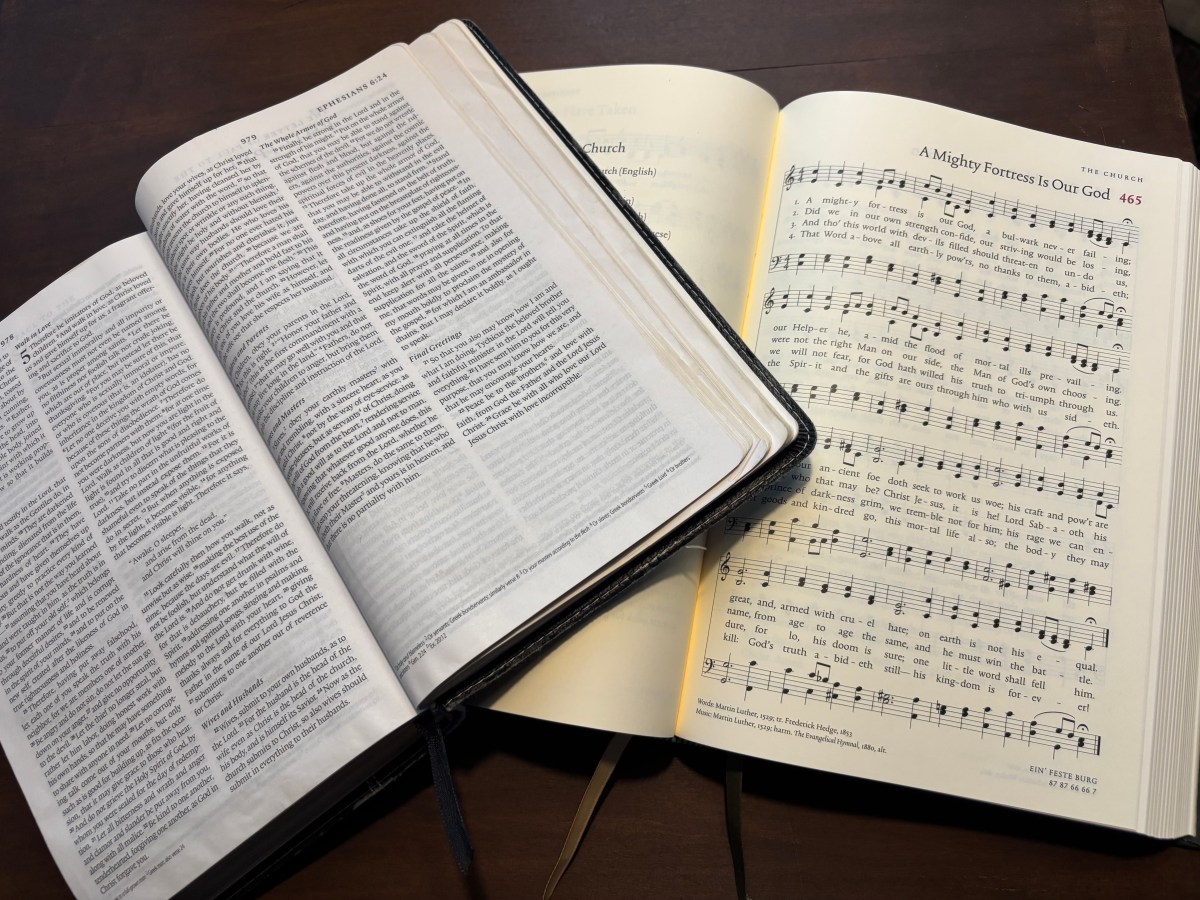
In my dream, my go-to action was to sing a hymn to combat evil rather than quote the Word of God. I see this as analogous to the way I too often function in real life. There have been many times the words of a hymn have encouraged me, refocused me on the things of the Lord, or reminded me of the Gospel, and that’s a legitimate and useful function. However, as deep, rich, and biblical as hymns can be, their verses are not a one-for-one substitute for the verses of God’s Word. Singing “A mighty fortress is our God” is good, but reading or quoting, “O my Strength, I will sing praises to you, for you, O God, are my fortress, the God who shows me steadfast love” (Ps 59:17) is so much better. The issue is not that I deeply love hymns and the beautiful truths they convey; it is, I admit, that I could recite many more hymn verses from memory than I could recite Bible verses. Herein lies the danger and the warning: There is no substitute for God’s Word, and there is no greater weapon we can wield against the powers of darkness. The hymn was effective and good in my dream against some evil, but it ultimately fell short.
Now, before I conclude, I want to be clear that I am not saying that all dreams are meant to teach us something or are some kind of revelation from the Lord. However, I do think it’s safe to say that there are some dreams that, when we can both clearly recall the contents of, and have a kind of understanding of a meaning (I hesitate to say “the meaning”) that accords with what the Bible teaches, they are worth pondering. For me, “a meaning” of this dream is to remind me that the singing of “psalms, hymns and spiritual songs” is the overflow of letting “the word of Christ dwell in [me] richly,” as Colossians 3:16 teaches, and that as good and helpful as hymns (and other Scriptural songs) are, they are not listed in Ephesians 6 as part of the armor of God and are not a substitute for the Sword of the Spirit.

